
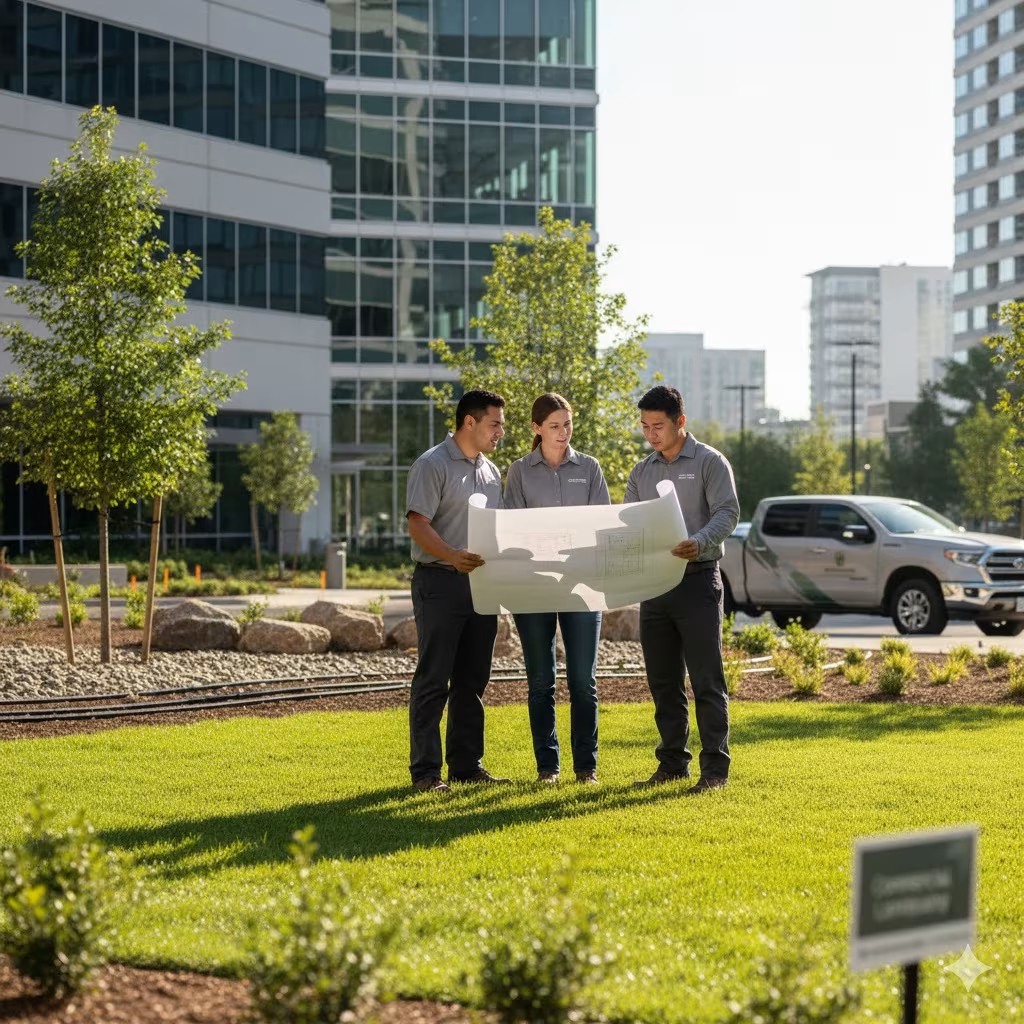
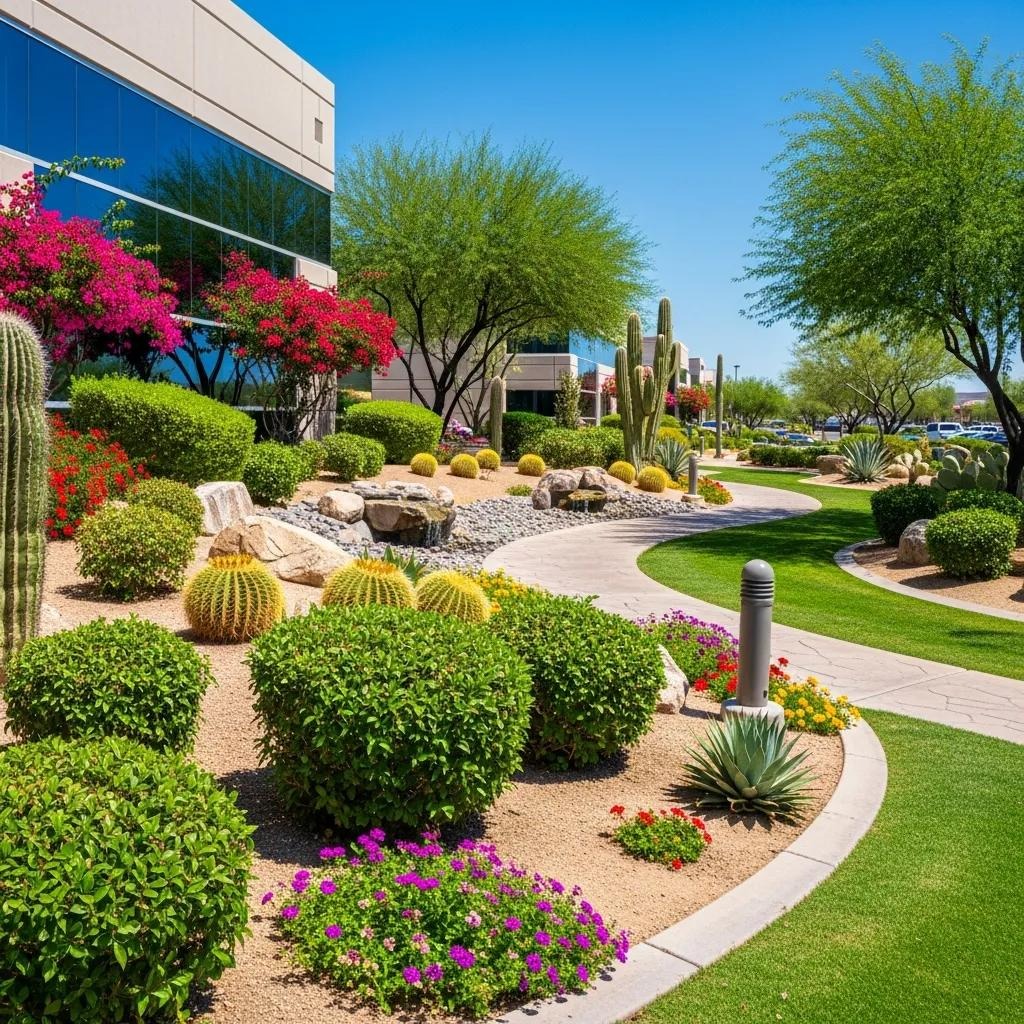
The company you hire for commercial landscaping affects curb appeal, compliance, operating costs, and tenant experience. This guide shows property managers how to assess a site’s needs, verify licenses and insurance, compare service models, weigh sustainable choices like artificial turf, and run a rigorous hiring process so you can confidently request consultations and accurate quotes from Sunburst Landscaping. You’ll get practical verification steps, contract clauses to insist on, and the interview questions that reveal red flags. We also cover Arizona-specific considerations — license checks, turf performance in arid climates, and lifecycle cost tradeoffs — so you can focus on water savings, safety, and long-term ROI. Use the checklists and tables here to streamline vetting and prepare the details contractors need for a fair, comparable quote.
Define Your Commercial Landscaping Needs
Before you solicit bids, clarify the property type, how the space is used, visual expectations, and how much maintenance you’ll accept. Those factors determine scope, service frequency, and technical requirements. For example, playgrounds and athletic fields need impact-rated surfacing and drainage, retail plazas need resilient, low-maintenance plantings that stay attractive, and multi-family courtyards need consistent, predictable upkeep. Start by mapping functional zones, noting safety obligations (ADA routes, slip resistance), and setting environmental goals like targeted water savings. Turn those targets into measurable service specs and RFP items contractors can price and commit to.
Use this short checklist to diagnose needs and build a clear scope of work before you request bids:
- Inventory site zones: identify high-use, low-use, and specialty areas.
- Set performance targets: percent water reduction, maintenance hours to save, and safety benchmarks.
- Prioritize interventions: maintenance tweaks, irrigation upgrades, turf replacement, or full design-build renovation.
Run the checklist results into a realistic budget and evaluation criteria — that makes it easier to compare proposals on an equal footing and move to vendor qualification.
How Property Type Changes Landscaping Requirements
Each commercial asset has different priorities. Athletic fields need impact performance and precise drainage; retail centers prioritize curb appeal and durable, low-maintenance plantings; apartments and condos want consistent common areas and predictable service schedules. Those priorities affect choices like turf infill, irrigation zones, plant palettes, and inspection cadence, and they help decide whether a design-build contractor or a specialist subcontractor is the better fit. Matching provider capabilities to the use case reduces procurement risk and sets realistic timelines for installation and handover.
Picking the right service model for the property type helps you set budgets and long-term expectations up front.
How to Set Budget Targets and Long-Term Goals
Budget with lifecycle costs in mind instead of chasing the lowest upfront price. Build a simple three-line projection: initial installation, annual operating cost (maintenance + water + parts), and expected replacement or major rehab intervals. Use measurable targets — water savings percentage or maintenance-hours reduced — to evaluate ROI scenarios. In Arizona, water reduction is often the primary objective: smart irrigation or artificial turf investments can pay back in utility and labor savings over a 5–15 year window depending on use. Put your goals into the RFP so bidders price to the same outcomes and include warranty and SLA line items that protect long-term performance.
With goals and a budget framework in place you can compare proposals on equal terms and move on to checking qualifications and compliance.
What Qualifications and Credentials Matter?
For commercial work, insist on verifiable state licensing, solid insurance and any industry or manufacturer certifications relevant to the scope — especially for design-build or artificial turf installations. A license shows legal scope and standing; insurance (general liability and workers’ compensation) protects the owner from project claims; manufacturer and trade certifications show technical competence for specialty systems. Ask for license numbers, a current Certificate of Insurance (COI) and installer or manufacturer certificates before award. For Arizona projects, confirm registration with the state contractor regulator and make sure the proposed work fits the contractor’s license classification.
Below is a compact reference of the credentials you should request and why each matters.
| Credential Type | What to Request | Why It Matters |
| State Contractor License (AZ ROC) | License number and classification | Confirms legal authority and the allowed scope of work |
| Insurance Coverage | Certificate of Insurance showing commercial general liability limits | Protects the owner from third-party claims and property damage |
| Manufacturer/Installer Certifications | Installer certificates for turf or irrigation systems | Ensures installation follows manufacturer requirements and preserves warranties |
| Industry Certifications | Relevant trade credentials (e.g., turf, irrigation) | Signals specialized technical skill and adherence to best practices |
Confirming these items lowers legal and financial risk and leads naturally to the next step: how to verify each credential and what protections they provide.
Why Licensing and Insurance Protect Your Investment
Licenses are public records you can use to confirm a contractor’s standing with Arizona regulators; insurance shifts certain financial risks away from the owner. Always request a license number and verify it with the state, and ask for a COI that shows current general liability and workers’ comp — name the owner as additional insured when appropriate. These documents protect you from contractor defaults, onsite injuries and damage claims. A contractor who resists providing documentation or has the wrong license classification should raise a red flag.
Once credentials are verified, look for experience and certifications that indicate quality beyond basic compliance.
Which Certifications and Experience Show Real Expertise?
Manufacturer approvals and industry certifications matter when you need specialized systems installed correctly — for example, certified turf installers, athletic-surface technicians, or smart irrigation programmers. Review portfolios that include similar property types and ask for references you can contact about warranty claims and ongoing maintenance. Manufacturer partnerships—especially from recognized turf brands—suggest the installer follows certified procedures that preserve warranties. Experience with municipal or institutional projects and evidence of design-build capability indicate a contractor can manage scope, schedule and subcontractor coordination effectively.
After confirming credentials and experience, evaluate the provider’s service offerings to see whether a comprehensive or specialist model fits your property.
How to Evaluate Service Offerings and Expertise
Map each provider’s capabilities to your defined needs. Compare design-build firms that handle planning, installation, and maintenance under one contract to specialists that deliver focused technical work like turf or irrigation. Design-build reduces coordination gaps and assigns lifecycle responsibility to one firm; specialists often bring higher technical depth for a single system but may require a general contractor to coordinate other trades. Ask for measurable deliverables, warranty terms, maintenance handover procedures, and SLA response times. Also evaluate sustainable practices — smart irrigation, drought-tolerant plant palettes, and modern turf systems — and quantify the expected operating-cost reductions in Arizona.
Use the comparison below to match service types to your property goals.
| Service Type | Typical Deliverable | Typical Benefit |
| Comprehensive Design-Build | Turnkey project delivery under one contract | Simplified accountability and clearer schedule control |
| Maintenance Programs | Regular mowing, pruning, and irrigation checks | Consistent appearance and predictable operating costs |
| Artificial Turf Installation | Engineered subbase, drainage, and certified installation | Significant water savings and lower recurring maintenance |
| Irrigation System Upgrades | Smart controllers, zoning, and efficiency tuning | Reduced water usage and easier regulatory compliance |
Decide whether you need an integrated provider or specialty contractors, then weighthe pros and cons for your site and budget.
Comprehensive vs. Specialized Services — Which Fits Your Site?
Comprehensive providers handle design, permitting, installation, and maintenance under a single contract, which reduces coordination headaches and concentrates warranty responsibility. Specialized firms focus on technical installations — like certified turf or irrigation work — and can deliver superior execution for that component, but you may need a prime contractor to coordinate other trades. Choose design-build for complex, large-scale jobs where one contract reduces risk; choose specialists when a single system requires certified expertise, and you can manage multiple vendor relationships. Consider warranty coverage across systems and who will be accountable for the asset’s lifecycle.
This decision frames your approach to sustainability and artificial turf for Arizona sites.
How Sustainable Practices and Artificial Turf Help Arizona Properties
Smart irrigation, drought-tolerant plantings, and engineered artificial turf cut water use, reduce labor, and lower the total cost of ownership in arid climates. Artificial turf eliminates irrigation on landscaped areas, reduces mowing and chemical inputs, and — when installed with proper drainage — performs well for athletic and pet areas. Pair turf with smart controllers and soil or rain sensors to maximize savings while keeping amenity quality high. Use measurable outcomes — percent water reduction, maintenance-hours saved — to justify capital investments to stakeholders.
After you compare service options and sustainability benefits, assessing reputation and operational reliability completes the vendor vetting process.
How to Assess Reputation and Operational Reliability
Combine qualitative and quantitative checks: review project portfolios, request recent client references for similar projects, read third-party reviews, and evaluate operational systems like account management, SLAs, and reporting cadence. Ask references about budget and schedule adherence, post-install support, and how warranty claims were handled. Operational maturity shows up as a named account manager, routine maintenance reports, and clear escalation paths; the absence of these is a warning sign. These checks reduce procurement risk and reveal whether a candidate can meet both the technical and service expectations you set.
Use this quick checklist when verifying references and operational maturity so you can compare bidders objectively.
- Request three recent commercial references for similar property types.
- Ask for examples of warranty claim resolutions and response times.
- Confirm whether the firm provides a dedicated account manager and a reporting cadence.
- Verify manufacturer partnerships and installer certifications for specialty systems.
Reference checks prepare you to ask informed interview questions and to draft contract terms that protect your investment.
Why Client References and Testimonials Matter
References show whether a contractor delivered on schedule, met quality expectations, and honored warranties and maintenance commitments. When you speak with references, ask about timeliness, handling of change orders, adherence to budgets, and ongoing responsiveness. Repeat business or long-term maintenance contracts are strong positive indicators. Public testimonials and photos are useful, but always corroborate them with direct reference checks — public reviews can be selective. Combining qualitative feedback with measurable outcomes, like confirmed water savings or reduced maintenance costs, gives a fuller picture of performance.
Direct reference feedback also sharpens the questions you’ll use in vendor interviews.
Why Communication and Account Management Matter
Clear communication and a single point of contact reduce project risk by enabling quick resolution, consistent quality, and straightforward escalation for warranty issues. Expect pre-construction planning meetings, weekly progress updates during installations, and monthly maintenance reporting afterward; if those touchpoints are absent, that’s a warning. A named account manager who provides scheduled reports and coordinates subcontractors indicates operational maturity and makes it easier to hold a vendor to SLAs. Strong communication also streamlines invoicing, change-order negotiations, and emergency responses.
With reputation and operations evaluated, move to the hiring checklist and the targeted questions that expose competency or red flags.
Questions to Ask During the Hiring Process
Use a structured interview to turn vendor conversations into verifiable data about capabilities, timelines, and liabilities. Ask for license and insurance documentation, project-specific references, and detailed maintenance plans. Probe turf warranty specifics and who handles warranty claims, and request a project schedule with milestones and contingency plans. Compare verbal answers to submitted documents — if a claim about workmanship, certification, or manufacturer approval can’t be backed up, treat it as a red flag. Finish interviews by asking for a written proposal that includes scope, timeline, warranties, and a maintenance SLA.
The table below converts common questions into what to listen for and why those answers matter when you score proposals.
| Question | What to Listen For | Why It Matters |
| Are you licensed for this scope? | Valid AZ ROC number that matches the proposed work | Confirms legal authority and appropriate license classification |
| Can you provide a COI and the name owner as additional insured? | Current COI with appropriate limits and endorsements | Protects the owner from liability and claim exposure |
| What manufacturer warranties apply to turf/irrigation? | Specific warranty lengths and installer obligations | Clarifies long-term coverage and the claim process |
| Who will be the account manager? | Named contact and defined communication cadence | Ensures operational accountability and consistent reporting |
Record documented answers and use them to score proposals, which helps when negotiating contract language and warranty terms.
Key Questions That Reveal Fit and Capacity
Focus on 5–7 direct questions that expose capacity, accountability, and technical fit: license and insurance verification, examples of similar projects, exact turf warranty terms, maintenance scope and frequency, a project timeline with milestones, and post-installation support. Strong answers include verifiable license numbers, clear warranty durations and claim processes, a named account manager, and sample maintenance plans tied to your performance metrics. Red flags are vague timelines, refusal to provide documentation or no maintenance SLA. Require written confirmation of any verbal commitments in the final contract.
Clear, documented answers let you move into the contract negotiation phase with confidence.
How Service Agreements and Warranties Protect Your Investment
Contracts and warranties define responsibilities, performance standards, and remedies, so there’s no ambiguity about scope, maintenance frequency, or financial obligations. Insist on a written scope with deliverables, maintenance frequencies, SLA response times, clear payment schedules, and explicit warranty terms for materials and workmanship with step-by-step claim procedures. Warranties typically come from both manufacturers (materials) and installers (workmanship) — specify both and require installer certification where needed to preserve manufacturer warranties. Consider negotiating retention, liquidated damages for missed milestones, and renewal terms for ongoing maintenance agreements to protect the owner.
With contract elements specified, you can compare final proposals and select the contractor that best meets both technical and operational criteria.
Why Sunburst Landscaping Is a Strong Choice for Arizona Commercial Projects
Sunburst Landscaping combines local Arizona experience with full commercial capabilities — design-build, installation, and maintenance — for athletic fields, courtyards, pet areas, playgrounds, multi-family communities, municipal sites, and schools. The company publishes Arizona ROC license numbers you can verify during vetting (AZ ROC 108581 – A and AZ ROC 065944 – CR21) and maintains manufacturer partnerships and certified installer relationships that support warranty-backed artificial turf installations. Leadership recognition — Don Gabbard’s 2023 ALCA Lifetime Achievement Award — reflects the company’s commitment to industry standards and best practices.
What Sunburst Brings to Commercial Projects
Sunburst’s advantages for property managers include a full-service design-build option that reduces coordination risk, certified turf installation capabilities backed by manufacturer partnerships, and commercial maintenance programs built for institutional schedules. Their regional focus supports Arizona-specific solutions — water-wise plant palettes and engineered turf/drainage approaches — and the published license numbers give you an easy verification step during procurement. Manufacturer partnerships and commercial references help validate technical competence and warranty adherence, making it simpler to compare Sunburst to other bidders.
How to Request a Consultation or Quote from Sunburst Landscaping
When you request a quote, prepare a concise project brief: property type, square footage of areas considered, primary goals (target water reduction %, desired maintenance frequency), and any site constraints or timeline needs. Ask the contractor to include license numbers, a COI, manufacturer certifications for turf or irrigation, reference contacts for similar projects, and a proposed maintenance SLA with response times and reporting cadence. Sunburst accepts consultation requests and will provide a tailored proposal that references its commercial services and installer certifications. Supplying this information up front shortens the quoting cycle and makes apples-to-apples comparisons easier.
Tie your vetting checklist to procurement: a clear scope and document checklist produces better proposals and, ultimately, a more dependable landscaping outcome.
Frequently Asked Questions
What should I look for when evaluating a company’s sustainability practices?
Look for water-saving measures (smart controllers, sensors, efficient emitters), drought-tolerant or native plant selections, and use of recycled or locally sourced materials. Ask about integrated maintenance plans that reduce chemical use and minimize waste. Certifications or partnerships with environmental organizations are helpful signals, but practical examples and measurable savings (gallons saved, reduced run time) are the most convincing evidence.
How do I make sure a landscaping company follows safety rules?
Request documentation of their safety program and training, and ask for evidence of compliance with local and state regulations. Confirm they carry appropriate insurance and ask about safety audits, incident reporting, and equipment training for staff. A reputable firm should readily provide safety records and any relevant certifications, such as OSHA-related training documentation.
What are the advantages of artificial turf for commercial sites?
Artificial turf can dramatically reduce water use and eliminate routine mowing and fertilizer costs. It keeps appearance consistent year-round and, when properly installed with engineered drainage, supports athletic and pet use. Modern turf products offer durable, safe surfaces — but warranty-backed installation and proper subbase work are critical to long-term performance.
How do I evaluate long-term value for landscaping investments?
Compare lifecycle costs: initial install, ongoing maintenance, water and eventual replacement. Measure ROI in terms of reduced operating costs, tenant satisfaction and potential property-value benefits. Use case studies or data from similar projects to estimate real-world outcomes like water savings and maintenance hours saved.
What should I include in an RFP to landscaping contractors?
Provide a clear project description with property type, size and desired services. State performance goals (water reduction targets, appearance standards, maintenance frequency), a timeline and any budget constraints. Request licenses, insurance, certifications and examples of similar projects with references. Clear performance metrics and documentation requirements lead to more comparable proposals.
How can I compare different proposals fairly?
Create a standard evaluation matrix with weighted criteria such as cost, scope, timeline, warranties and qualifications. Score each proposal against the same rubric and review deliverables, maintenance plans and warranty language side-by-side. Factor in qualitative items like communication, responsiveness and references to reach a decision that balances price and long-term value.
Conclusion
Choosing the right commercial landscaping partner protects property value, supports compliance and advances sustainability goals. Follow the steps in this guide to set clear performance targets, verify credentials, compare service models and use focused interview questions and contract language to reduce risk. When you’re ready, reach out to Sunburst Commercial Landscaping for a site-specific consultation and a proposal built around your goals. A clear scope and the right partner make lasting, cost-effective landscapes possible.