
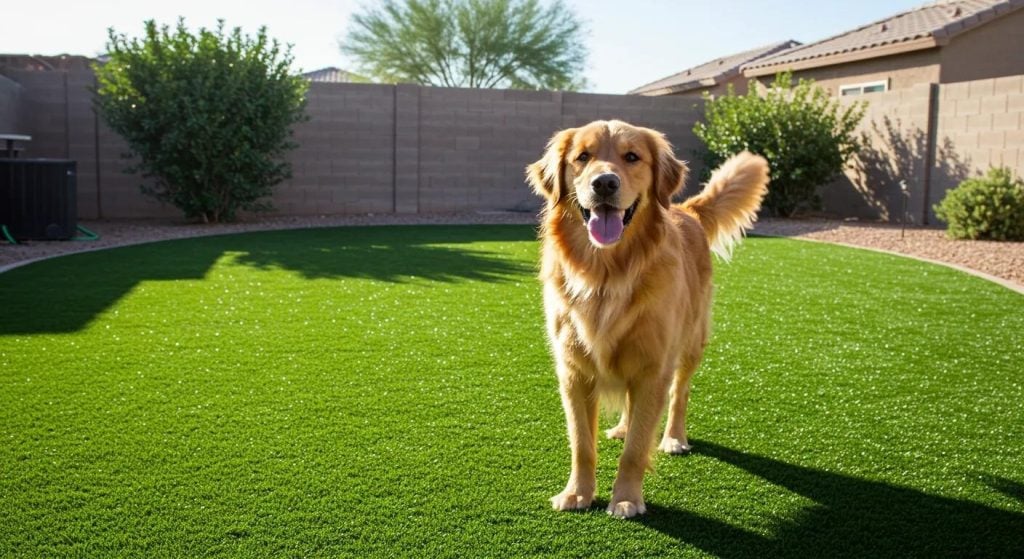
Dog-friendly artificial grass isn’t just turf; it’s a specially engineered synthetic solution built for ultimate durability, superior drainage, and effective odor control. This means your furry friends stay comfortable, and your yard remains beautifully low-maintenance. In this comprehensive guide, we’ll explore how installation costs vary for small versus large projects right here in Arizona. We’ll uncover the technical details that drive price differences and provide practical budget examples to help you plan with confidence.
Many pet owners feel uncertain about artificial grass costs, and for good reason! Factors like material choices, base preparation, drainage solutions, and our unique Arizona climate all play a big role in the final price. This article will demystify these elements, explaining the value behind each investment. You’ll discover the main cost factors, get realistic per-square-foot ranges for both small and large projects, and learn how to evaluate the long-term return on investment (ROI) specifically for an Arizona home. We’ll dive into key cost drivers, small-yard economics with sample estimates, the benefits of scale for larger properties, long-term savings, durability, why choosing a specialist installer matters, and quick answers to your most common questions. Our goal is to give you the detailed insights on materials, infill, drainage, and installation processes you need to confidently compare quotes.
What Really Drives the Cost of Dog-Friendly Artificial Grass in Arizona?
When it comes to your project’s total price, several tangible and site-specific elements are key. These include the quality of your chosen turf material, the essential site preparation and base construction, your drainage and infill selections, the complexity of labor and site access, and any extra features like custom edging or cooling technologies. Each of these factors directly impacts material costs, the time our team spends on-site, and your turf’s long-term performance. For instance, investing in a higher-grade polyethylene turf might mean a higher upfront material cost, but it significantly reduces how often you’ll need replacements. Understanding these core drivers empowers you to compare bids fairly and prioritize investments that truly reduce recurring costs, like advanced odor control or proper regrading. Below, you’ll find a clear list of these primary drivers, followed by a concise table summarizing typical cost ranges and their impact.
- Turf Material Quality & Pile Construction: Directly impacts durability, feel, and comfort for your pets.
- Site Excavation, Base Aggregate & Compaction: Crucial for ensuring longevity and optimal drainage performance.
- Drainage Systems & Infill Type: Essential for managing pet urine runoff, controlling odors, and keeping the surface cooler.
- Labor Accessibility, Yard Shape & Features: These can increase installation time or require specialized equipment, affecting overall labor costs.
The truth is, different combinations of these factors can lead to a wide range of prices. That’s why getting localized estimates, specifically tailored to Arizona’s unique soil and heat conditions, is absolutely vital before you commit to any project scope.
This handy table breaks down how each factor typically influences your cost, helping you quickly grasp the key comparisons.
| Factor | Typical Cost Impact | Typical Range / Note |
|---|---|---|
| Turf Material (per sq ft) | Direct material cost and longevity | $5 – $20 / sq ft depending on fiber and pile |
| Site Preparation | Excavation, grading, base rock cost | $1.50 – $6 / sq ft; higher for deep excavation |
| Drainage & Subsurface Work | Required for pet areas & slopes | $0.50 – $4 / sq ft; engineered drains cost more |
| Infill Type | Odor control and heat mitigation | $0.25 – $2 / sq ft; antimicrobial infill costs more |
| Labor & Accessibility | Crew time, mobilization, complexity | Variable; minimums increase small-job unit cost |
As you can see, material and site preparation often make up the largest parts of your budget. Meanwhile, drainage and infill are crucial for addressing those pet-specific performance needs that truly enhance long-term value.
How Do Different Turf Materials Affect Your Installation Price?
The type of turf fiber you choose really sets the product tier and is a major factor in your per-square-foot pricing. This is because the fiber’s composition, the quality of the backing, and the pile height all influence both manufacturing costs and the expected lifespan of your new lawn. Polyethylene varieties, commonly used for pet turf, offer a great balance of softness and durability at a moderate price point. Nylon options are even more heavy-duty but come with a higher per-square-foot cost. While polypropylene can be found in budget products, it generally offers less wear resistance.
Your selection also ties into pile height and density: denser, higher-pile systems might cost more initially, but they resist compression better under active pets and shed waste more efficiently, ultimately reducing your maintenance efforts. Opting for antimicrobial or specialized cooling infill will increase your total materials budget, but it can significantly improve odor control and pet comfort in Arizona’s intense heat, offering excellent value against ongoing maintenance needs.
Remember, your turf choice also impacts warranty and how often you might need replacements. So, it’s smart to align your material selection with your pet’s activity levels and your desired turf lifespan. Next, we’ll explain how crucial site preparation and drainage choices work hand-in-hand with your material selection to ensure your entire system performs beautifully.
What Site Preparation and Drainage Costs Should You Budget For?
Proper site preparation is truly the bedrock of your artificial turf project. It’s the structural foundation that prevents settling, ensures excellent drainage, and protects the turf backing. This vital work includes excavation, geotextile placement, compacted base aggregate, and precise grading. These tasks typically account for a significant portion of both labor and materials in any pet turf installation. Here in Arizona, with our varied soil conditions and occasional heavy rain, expertly engineered grading and drainage channels are even more critical to prevent pooling and stubborn odor issues, which can increase preparatory costs.
Itemized prep tasks often include trenching for edge restraints, importing and compacting base material, and installing subsurface drains or permeable layers. Each of these components comes with its own per-square-foot or per-linear-foot pricing. Investing in well-executed base work significantly reduces long-term risks and often lowers your total cost over a decade by preventing costly rework and premature turf failures.
Below, you’ll find a quick-scan table outlining common site-prep components and their typical price ranges.
| Site Component | What It Covers | Typical Cost Range |
|---|---|---|
| Excavation & Removal | Topsoil strip, disposal | $0.75 – $3 / sq ft |
| Compacted Base Aggregate | Crushed rock, grading, compaction | $0.75 – $2.50 / sq ft |
| Geotextile / Weed Barrier | Separation and added stability | $0.10 – $0.40 / sq ft |
| Drainage System | French drains, channels, outlets | $0.50 – $4 / sq ft |
| Edge Restraints | Concrete, aluminum, or plastic edging | $5 – $20 / linear ft |
These components establish the essential structural baseline for your turf. Next, let’s explore why small yards often see higher per-square-foot costs, as fixed mobilization and material waste are spread across fewer square feet.
What’s the Cost for Artificial Turf in Your Small Dog-Friendly Yard?
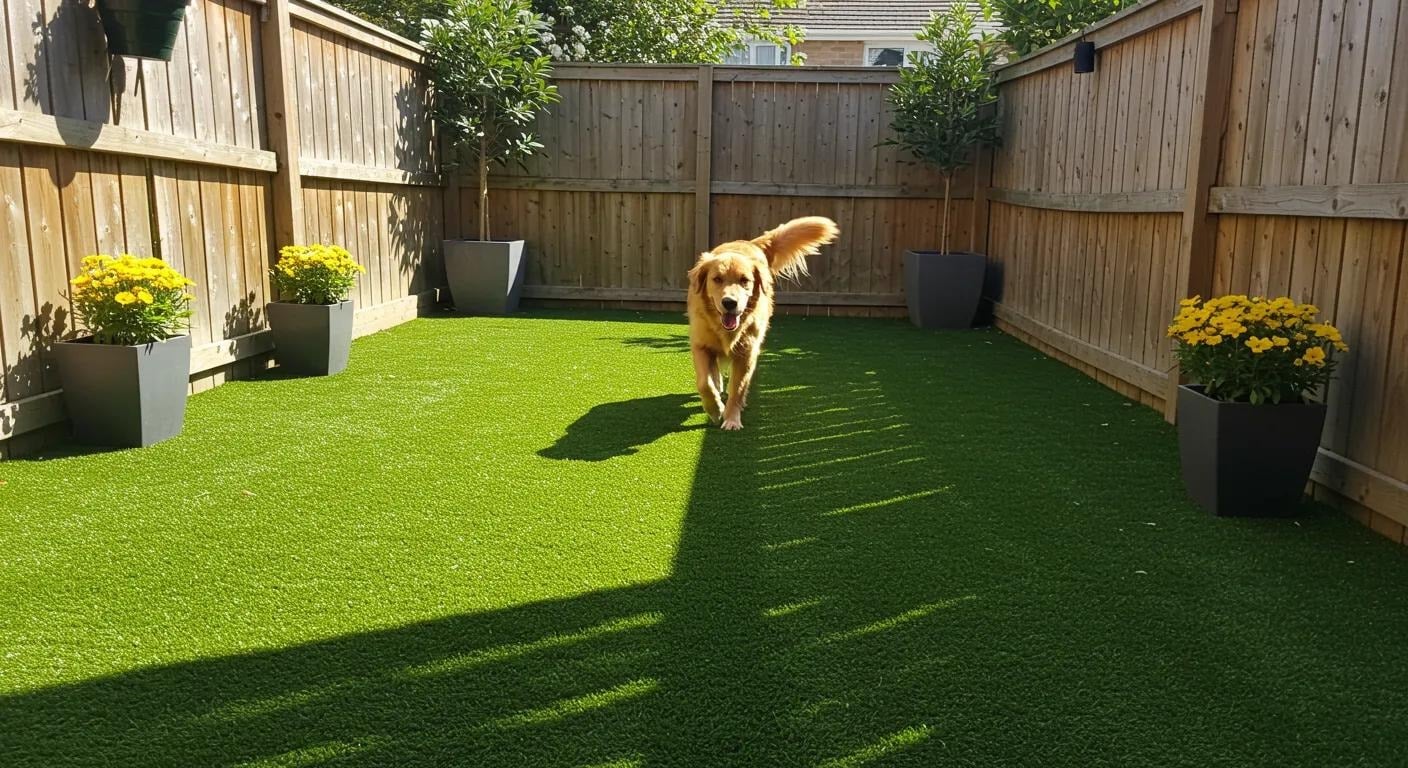
For those charming, smaller dog-friendly yards (typically under 500 sq ft), you’ll generally find that per-square-foot costs are a bit higher. This is because fixed expenses like mobilization, minimum labor hours, and material waste from cutting and trimming are spread across fewer square feet. Our typical small-job per-square-foot ranges in Arizona reflect this reality: expect a range that covers both premium pet-rated turf and the essential, correct drainage for a high-quality installation. Even small projects demand the same foundational base construction and smart drainage solutions as larger ones, so unit pricing naturally increases when mobilization and minimum crew hours factor into the total. The sample estimates below offer concrete budget examples, illustrating how materials, preparation, labor, and infill add up for two common small-yard scenarios. For a precise, site-specific quote and to refine these numbers for your unique yard, Sunburst Landscaping offers complimentary Free Design Sessions.
Small yards often come with their own set of challenges, like tricky access points and irregular shapes. These can add to cutting labor and seam work, which in turn increases the cost per square foot. Understanding these fixed-cost contributors helps you decide whether to embrace the higher short-run unit cost for your specific area or consider expanding the scope to adjacent areas to achieve better per-unit value.
| Project Example | Material | Prep & Base | Labor & Infill | Total Estimate |
|---|---|---|---|---|
| 200 sq ft small run | $1,000 – $2,000 | $600 – $1,000 | $800 – $1,200 | $2,400 – $4,200 |
| 400 sq ft compact backyard | $2,000 – $4,000 | $1,200 – $2,000 | $1,200 – $2,400 | $4,400 – $8,400 |
These examples clearly show how fixed items, such as mobilization and edging, lead to higher per-square-foot ps for smaller projects. If you’re looking for a precise estimate tailored to your yard, Sunburst Landscaping is here to help with Free Design Sessions and customized quotes, ensuring your product selection and prep scope perfectly align with your budget.
Why Do Smaller Yards Often Have a Higher Cost Per Square Foot?
Smaller yards typically see higher per-square-foot rates primarily because certain costs remain constant, regardless of the area being covered. Things like mobilization, equipment setup, and minimum labor hours are fixed expenses that simply form a larger percentage of the total cost on smaller projects. You’ll also find that material waste from trimming and seaming is proportionally greater when turf pieces are cut to fit tight, irregular shapes. Plus, disposal or haul-away fees might have minimum charges that don’t scale down with area. If permits or inspections are required, those minimums also create a baseline expense. These factors combined mean a 200 sq ft job could have a 15–40% higher unit cost compared to a 1,000 sq ft job, depending on how accessible and complex your site is.
Understanding these effects can really help you compare quotes effectively. If two bids seem significantly different, don’t hesitate to ask for a line-item breakdown of mobilization and waste allowances. This will reveal how those fixed costs are being allocated. In the next section, we’ll provide specific small-project budget examples to make these differences even more tangible.
What’s a Realistic Cost Range and Example Estimate for Small Pet Turf Projects?
For small pet turf projects in Arizona, you can generally expect per-square-foot ranges to fall somewhere between $8 and $22 per sq ft for installed pet-rated turf, including the right base materials and quality infill. This spread largely depends on the turf tier you choose and the complexity of your drainage needs. For a straightforward 300 sq ft area with easy access and minimal grading, a mid-range pet turf system might total between $3,000 and $6,000. This would typically include antimicrobial infill and a properly compacted base. On the other hand, a small yard requiring significant slope correction or advanced engineered drainage could push totals higher, even if the turf material costs remain the same. These example budgets reflect common combinations of material grade, base work, and infill choices, but remember that site-specific variables will always influence your final quote.
Because unit costs for small jobs can vary quite a bit based on access and preparation needs, requesting a free, on-site estimate is truly the most reliable way to nail down your budget. Sunburst Landscaping’s local expertise helps homeowners pinpoint which line items are essential and where adjustments can be made to fit financial constraints.
Considering Costs for Large Dog-Friendly Artificial Grass Yards?
For expansive dog-friendly yards (those 1,000+ sq ft), you’ll typically enjoy the benefits of economies of scale. This means bulk material discounts, more efficient crew utilization, and lower relative mobilization costs, all of which help reduce your per-square-foot pricing. However, larger projects often come with their own set of logistical needs—think dedicated staging areas, potentially multiple crews, and heavier machinery for compaction and grading—which might introduce separate line items. Drainage across large areas may also require more sophisticated engineered solutions to effectively manage substantial runoff and ensure consistent odor control across different zones. While this raises the absolute cost, it usually lowers the unit cost. The comparison table below clearly illustrates how the cost-per-square-foot shifts across various large project sizes and where those mobilization and waste factors become less impactful.
Larger projects also open up opportunities for design optimizations that minimize seams and allow for more continuous turf rolls, further reducing labor per square foot. Here at Sunburst Landscaping, our extensive experience with scaled installations and strong partnerships with industry suppliers enable us to expertly handle complex, large-scale work. We invite you to request a consultation for detailed planning tailored to your grand vision.
| Size Comparison | Cost per sq ft | Mobilization Impact | Waste / Notes |
|---|---|---|---|
| 1,500 sq ft | $6 – $15 / sq ft | Moderate | Lower waste; bulk pricing begins |
| 2,500 sq ft | $5.50 – $12 / sq ft | Lower | Significant bulk discounts possible |
| 3,000+ sq ft | $5 – $11 / sq ft | Lowest relative | Staging/logistics increase absolute cost |
This table clearly shows that per-square-foot pricing generally decreases as your project scales up. However, remember that the overall job complexity and specific engineered drainage needs might offset some of those savings. Next, we’ll break down the exact mechanics behind these economies of scale.
How Do Larger Yards Benefit from Economies of Scale in Pricing?
For larger yards, you’ll find that relative mobilization and setup costs are significantly reduced. This is because the hours our crew spends and the equipment costs are spread across a much greater square footage, making each additional square foot considerably more affordable to cover than in a smaller job. Our suppliers also offer attractive volume discounts for turf rolls and infill, which directly lowers your material unit costs. Plus, fewer seams and less intricate cutting labor mean improved installation efficiency. These operational efficiencies translate into faster per-unit installation times when our crews can work in continuous runs, and disposal or haul fees are amortized much more favorably. Ultimately, these scale advantages typically result in 10–30% lower per-square-foot pricing when you move from small to large project bands, depending on your chosen product tiers and site complexity.
However, it’s worth noting that very large sites might require dedicated staging areas, temporary traffic control, or even additional drainage engineering. So, as a homeowner, you should always weigh those per-unit savings against potential increases in absolute logistical costs. In the next section, we’ll present some example large-project budgets with detailed line-item breakdowns.
What Are Example Cost Estimates for Large Pet Turf Installations?
Representative budgets for large pet turf installations in Arizona will naturally depend on the turf quality and specific drainage requirements. For instance, a 1,500 sq ft installation using mid-grade pet turf and a standard engineered base might range from $9,000 to $22,500 in total. On the other hand, a more expansive 3,000 sq ft high-end pet system, complete with enhanced drainage and antimicrobial infill, could range from $15,000 to $33,000. Common line items for these larger projects typically include bulk turf material, compaction and base aggregate, comprehensive drainage channels, infill, edging, and multi-crew labor. Keep in mind that specialized features—like retaining walls, complex grading, or slope stabilization—can add significant amounts beyond these base estimates.
For large-scale projects, partnering with an installer who has extensive experience in scaled logistics and strong supplier relationships can significantly reduce risk and often secure better material pricing. Sunburst Landscaping’s robust partnership capabilities are designed to support these procurement advantages, and we’d be happy to explore them with you during a design-focused consultation.
Unlocking Long-Term Value: Dog-Friendly Artificial Grass & ROI in Arizona
Investing in artificial turf specifically designed for dogs offers incredible long-term value. You’ll enjoy significantly reduced water usage, lower ongoing maintenance costs, and predictable durability that stands up to pet wear and staining far better than natural grass. In Arizona’s arid climate, the savings on irrigation are a huge financial win: eliminating or drastically cutting down on watering can truly lower your annual utility bills. Over time, those maintenance savings—no more mowing, fertilizing, or constant reseeding—really add up, boosting your net present value compared to the endless upkeep of a natural lawn. These economic benefits blend seamlessly with tangible lifestyle improvements for pet owners, giving you a consistently usable outdoor space and much simpler sanitation routines.
When calculating your comparative ROI, it’s important to factor in the expected lifespan of the turf, any potential replacement schedules, and any annual maintenance for infill grooming or odor-control additives. In the next section, we’ll quantify typical water and maintenance savings and walk you through a sample payback framework.
How Much Can You Really Save on Water and Maintenance Costs?
Making the switch from natural turf to artificial pet turf in Arizona typically means drastically cutting or completely eliminating irrigation costs for that area. This can translate into significant annual savings, which will vary based on your regional water rates and the size of your lawn. Beyond just watering, homeowners save on mowing, fertilizing, aeration, and all the associated labor or equipment expenses. Combined, these reductions commonly add up to hundreds, or even over a thousand dollars, per year, depending on your yard size and local utility costs. Here’s a simple payback example: if replacing a 1,000 sq ft lawn saves you $700 annually, and the installed cost difference compared to minimal natural grass care is $10,000, your payback period is roughly 14 years—and even shorter when you factor in drought restrictions or rising water costs.
Dog Park Design Criteria: Planning and Surface Materials
The aim of this study is to determine how a successful dog park design criteria should be. For this purpose, dog parks were examined under the headings of planning (accessibility, location, car parking and roads, other facilities) and design (entrances and exits, gates, boundaries, surface materials, activity areas, park furniture, planting).
These ps clearly show that your ROI improves significantly with higher local water prices and more intensive natural-lawn maintenance schedules. In the next section, we’ll explore the impact on durability and your property’s value.
What’s the Impact on Property Value and Durability for Pet Turf?
The durability of high-quality, pet-rated artificial turf typically spans from a decade to several decades, depending on the product quality, the underlying base construction, and your maintenance routine. Many top-tier systems maintain their beautiful appearance and full function for 10–20 years. Pet-specific features—like antimicrobial infill, dense thatch layers, and excellent drainage—are crucial for extending this useful life by minimizing odors and preventing the kind of wear that can degrade turf faster. From a resale perspective, a well-installed, low-maintenance yard that effectively solves pet-related damage can be a huge draw for buyers in markets where drought and outdoor usability are top priorities, though the exact impact on appraised value can vary with individual buyer preferences. Providing proper installation and maintenance documentation, along with transferable warranties where available, helps boost perceived property value by reassuring new owners about future costs.
Remember, maintaining your turf’s health through routine grooming and ensuring optimal drainage performance are key best practices that preserve both its durability and its appeal for years to come.
Why Sunburst Landscaping is Your Top Choice for Dog-Friendly Artificial Grass in Arizona
Sunburst Landscaping proudly stands as your premier local Arizona resource for artificial turf projects. We offer design-focused consultations, leverage established supplier partnerships, and bring extensive pet-focused installation experience—all perfectly aligned with the technical needs we’ve discussed. Our service model truly shines with Free Design Sessions and tailored quotes, allowing homeowners like you to clearly see how material choices, base design, and infill options translate into a project budget specifically crafted for your lot and your pet’s needs. Sunburst’s strong partnerships with recognized landscape suppliers and specialized pet-focused product lines ensure you get access to top-quality turf and infill options that are ideal for Arizona’s heat and water conditions. For homeowners seeking an installer who can expertly translate complex cost drivers into a clear, actionable plan, our consultation services are designed to help you prioritize investments that deliver superior long-term ROI.
Choosing an experienced local installer significantly reduces risk. Our on-site assessments are thorough, identifying potential hidden costs like subsurface utilities or drainage constraints before construction even begins. This means our quotes are more reliable, and your budget is far less prone to unexpected surprises.
How Does Sunburst’s Experience and Partnerships Benefit Your Project?
Sunburst’s long-standing supplier relationships mean we can offer you access to the best pet-rated turf options and specialized infill types that truly excel at odor control and heat mitigation. This ensures your material selection perfectly matches Arizona’s unique performance needs. Our project approach emphasizes meticulous base engineering, thoughtful drainage planning, and adherence to the highest installation standards—all critical factors that preserve turf longevity and significantly reduce lifecycle costs. These benefits translate into clearer warranty conversations, better product availability, and smoother logistics, especially for larger projects that require staged deliveries and multiple crews. Homeowners truly benefit from this comprehensive approach because it streamlines the entire process and ensures your product choices align with the pet-safety and heat-performance features that matter most in our Arizona climate.
These operational advantages are particularly valuable for complex sites where engineered drainage or multi-zone installations are required. Let’s talk about how our free consultation works next!
What Free Consultations and Quote Options Are Available?
Sunburst is pleased to offer a Free Design Session, which typically includes a thorough visual site assessment, an in-depth discussion about your pet’s use patterns and your top performance priorities, and an initial conversation to identify any necessary base work and drainage solutions. During your consultation, you can expect to receive a clear timeline for your written estimate, expert guidance on the best product tiers for pets, and an outline of potential trade-offs between upfront cost and long-term maintenance savings. To help us provide the most accurate quote, preparing for your visit by noting areas of heavy pet use, any existing drainage issues, and accessibility constraints is incredibly helpful. This consultation process makes it much easier for homeowners to compare line-item costs—materials, prep, drainage, and labor—and confidently decide which upgrades will deliver the best long-term value for your unique situation.
Requesting this Free Design Session is truly the recommended next step for any homeowner who desires a precise, site-specific cost evaluation perfectly aligned with Arizona’s conditions and your pet‘s specific requirements.
Your Top Questions About Dog-Friendly Artificial Grass Costs, Answered!
This section provides concise answers to your most common price and performance questions, designed to quickly address your search queries and help pet owners make informed decisions about their turf projects. Each Q&A offers a direct answer, highlighting the main variables that influence the outcome, so you can quickly understand why quoted numbers might differ between properties. Following these FAQs, you’ll find a brief call-to-action block outlining how to get your Free Design Session and Request a Quote, connecting all the guidance above to a practical next step.
What’s the Typical Installation Cost Per Square Foot in Arizona?
The installation cost per square foot in Arizona typically spans a broad range due to variations in turf quality and site preparation. You can generally expect to pay approximately $5 to $22 per sq ft for installed dog-rated systems. The lower end applies to large, straightforward installations, while the higher end covers smaller, more complex, or premium-grade systems. Key factors that influence the price include the quality of the turf material, the depth and quality of base preparation, any engineered drainage needs, and your infill selection for odor control or cooling. For a truly accurate per-square-foot p, we always recommend comparing line-item quotes for materials and base work, rather than relying on a single, aggregated number.
As always, a site-specific estimate from a trusted local installer will accurately reflect the true access, grading, and drainage needs unique to your property, ultimately determining your final per-square-foot cost.
Is Artificial Turf Really Safe and Comfortable for My Dogs?
The safety and comfort of artificial turf for your dogs largely depend on careful product selection, the right infill choice, and professional installation quality. Pet-rated polyethylene fibers with appropriate pile density offer excellent cushioning and traction, while antimicrobial or silica-based infills are crucial for minimizing odor and preventing bacterial buildup. Heat is a very legitimate concern in Arizona, so best practices include choosing heat-resistant fiber constructions, utilizing cooling infill options, and always providing ample shade and hydration to reduce surface temperatures. Routine maintenance—like rinsing soiled areas and brushing the infill—is essential for keeping the turf hygienic and comfortable, while proper drainage actively prevents odors and standing moisture.
By choosing the ideal combination of turf fiber, infill, and base drainage, and consistently following recommended upkeep, artificial turf can absolutely be a safe and wonderfully comfortable surface for most dogs.
Ready for Your Dream Yard? Sunburst Landscaping Offers Free Design Sessions & Quotes!
Sunburst Landscaping is here to provide Free Design Sessions and tailored quotes, transforming the cost drivers we’ve discussed into a clear, actionable plan for your unique yard. Our deep local Arizona expertise, award-winning design philosophy, and strong partnerships with recognized landscape suppliers ensure you choose the perfect pet-rated turf, engineered drainage, and infill options that expertly balance upfront cost with long-term value. If you’re looking for a precise, site-specific estimate or a design discussion focused on superior odor control, effective heat mitigation, and lasting durability, simply request a Free Design Session or Request a Quote by contacting Sunburst Landscaping. Our dedicated team will assess your property and outline a clear scope and timeline. For the most accurate consultation, we recommend preparing site photos, measurements, and notes on your pet’s activity patterns.
- What Your Free Design Session Includes: An on-site assessment, personalized product recommendations, a thorough drainage review, and a clear timeline for your written estimate.
- Why It Helps You: It transforms general price ranges into a reliable, detailed line-item quote, perfectly tailored to your yard’s specific soil, slope, and access challenges.
- Your Next Steps: Gather your yard dimensions and make notes on any problem areas. This helps our estimator provide you with the most accurate budget possible.
Frequently Asked Questions
What are the benefits of using dog-friendly artificial grass over natural grass?
Dog-friendly artificial grass offers several advantages over natural grass, particularly in arid climates like Arizona. It requires no watering, which significantly reduces water bills and conserves resources. Additionally, it eliminates the need for mowing, fertilizing, and pest control, leading to lower maintenance costs. The durability of synthetic turf also means it can withstand heavy pet use without developing bare patches or mud, providing a consistently usable outdoor space for pets. Furthermore, many artificial grass products are designed with drainage systems to manage pet waste effectively, enhancing hygiene.
How long does dog-friendly artificial grass typically last?
The lifespan of dog-friendly artificial grass can vary based on the quality of the materials used and the level of maintenance it receives. Generally, high-quality synthetic turf can last anywhere from 10 to 20 years. Factors such as UV exposure, foot traffic, and proper drainage can influence durability. Regular maintenance, including brushing and rinsing to remove debris and pet waste, can help extend the life of the turf. Homeowners should also consider warranties offered by manufacturers, which can provide additional assurance regarding the longevity of the product.
Can artificial grass get too hot for dogs in Arizona?
Yes, artificial grass can become hot in Arizona’s intense sun, potentially causing discomfort for pets. However, many manufacturers offer heat-resistant turf options designed to mitigate this issue. Using specialized cooling infills can also help lower surface temperatures. Providing shaded areas and ensuring pets have access to water can further enhance their comfort. It’s essential for pet owners to monitor their dogs during hot weather and to choose turf products that prioritize heat mitigation to ensure a safe and enjoyable outdoor environment.
What maintenance is required for dog-friendly artificial grass?
Maintaining dog-friendly artificial grass is relatively straightforward compared to natural lawns. Regular tasks include rinsing the turf to remove pet waste and debris, brushing the fibers to keep them upright, and checking for any signs of wear or damage. Depending on the infill used, periodic replenishment may be necessary to maintain odor control and cushioning. Additionally, homeowners should inspect drainage systems to ensure they are functioning correctly, preventing water pooling and odors. Overall, routine maintenance helps preserve the turf’s appearance and longevity.
Are there any health concerns associated with artificial grass for pets?
Health concerns related to artificial grass for pets primarily revolve around the materials used in its production. High-quality, pet-rated turf is designed to be safe and non-toxic, but it’s crucial to choose products that meet safety standards. Some infills may contain harmful chemicals, so opting for antimicrobial or natural infills can mitigate risks. Regular cleaning and maintenance are also essential to prevent bacterial growth and odors. Pet owners should research and select reputable brands that prioritize pet safety in their turf products.
How does the installation process for artificial grass differ for small vs. large yards?
The installation process for artificial grass varies significantly between small and large yards due to factors like mobilization costs and site preparation. In small yards, fixed costs such as labor and equipment setup are spread over fewer square feet, leading to higher per-square-foot pricing. Conversely, larger installations benefit from economies of scale, reducing the relative cost per square foot. However, larger projects may require more complex logistics, including staging areas and additional drainage solutions. Each project should be assessed individually to determine the best approach for installation.
Ready to Transform Your Yard?
Investing in dog-friendly artificial grass offers incredible advantages: think significantly lower maintenance costs, enhanced durability, and a much more comfortable space for your beloved pets. By truly understanding the various cost factors and the potential savings, you, as a homeowner, can make confident, informed decisions that perfectly suit your budget and lifestyle. To ensure a truly tailored approach for your specific yard needs, we highly recommend scheduling a Free Design Session with Sunburst Landscaping. Start your journey today towards a beautiful, low-maintenance, and perfectly pet-friendly outdoor oasis!