
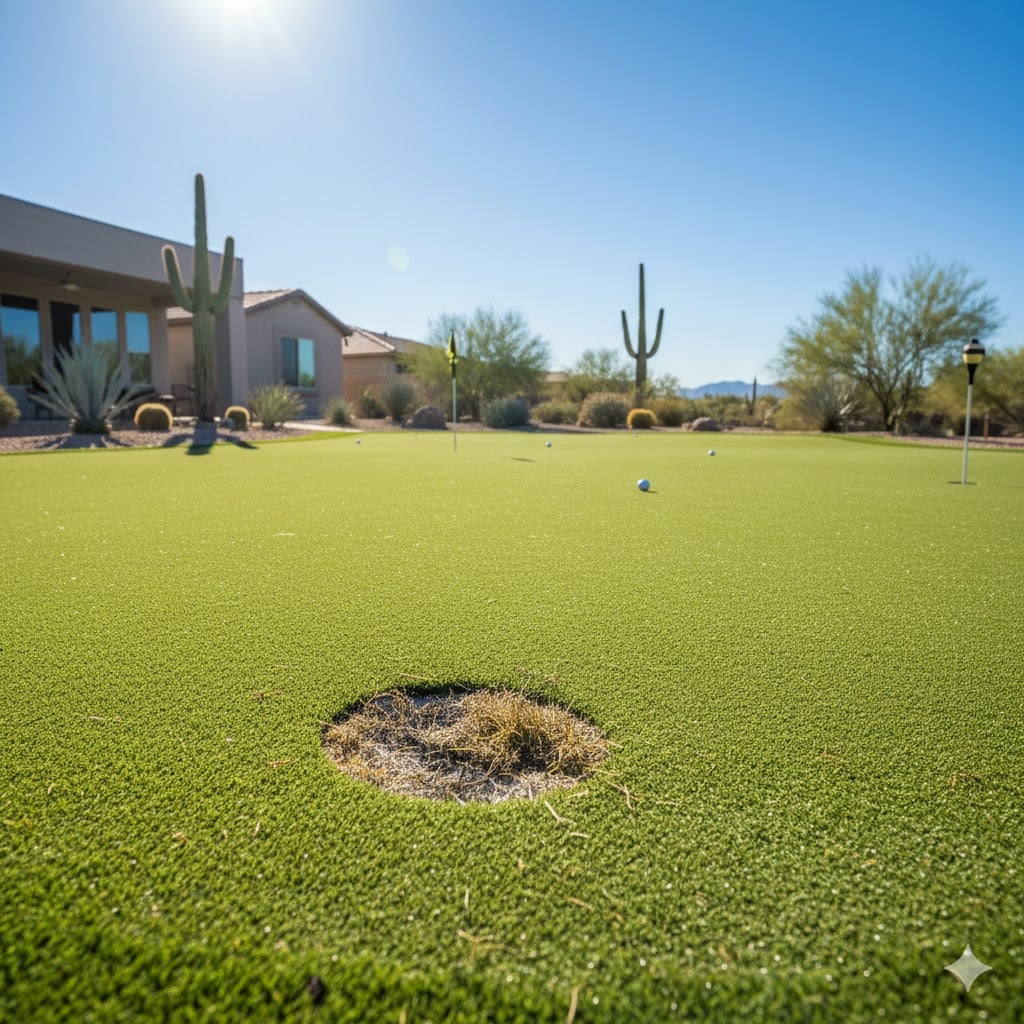
Arizona’s intense heat raises a common question: how long will an artificial putting green last here? At Sunburst Landscaping, we see homeowners and golf fans worry about high temperatures and strong UV rays. This guide breaks down how climate affects synthetic greens, what materials and installation choices matter most, and everyday care that helps your green look and play great for years.
How Does Arizona’s Climate Affect the Durability of Artificial Putting Green?
Arizona puts synthetic turf to the test. Long stretches of high heat and relentless sun can accelerate wear, alter surface temperatures, and change how a green performs. Knowing what to watch for helps you choose materials and maintenance that protect your investment.
What Role Does UV Radiation Play in Turf Fiber Degradation?
UV radiation is a main cause of turf fading and fiber breakdown. Over time, sunlight can weaken the chemical bonds in plastic fibers, making them brittle and dull. Specifying UV-stabilized fibers is one of the easiest, most effective ways to preserve color, strength, and overall appearance in our sunny climate.
How Do Extreme Temperatures Influence Surface Heat and Turf Lifespan?
High air temperatures can make an artificial green feel very hot to the touch. That rise in surface heat rarely melts modern turf, but repeated exposure to extreme heat can speed aging. Surface temperature affects comfort and playability, so we recommend cooling strategies and materials designed for heat-prone regions to keep your green both usable and long-lasting.
What Technologies Does Sunburst Landscaping Use to Enhance Heat Resistance?
We combine proven materials and smart installation to protect greens from Arizona’s harsher elements. Our approach focuses on UV protection, cooling technologies, and installation best practices that together extend the life of your synthetic putting surface.
How Do UV-Stabilized Fibers Prevent Fading and Material Breakdown?
We specify UV-stabilized fibers in our putting greens so the turf holds color and resists structural breakdown from sun exposure. That stability translates to fewer visual changes and more consistent performance year after year — especially important under Arizona’s strong sunlight.
Independent research supports better longevity with UV-stabilized fiber formulations.
Enhancing Artificial Turf Durability with UV-Stabilized Fibers
Studies show that fibers produced with UV-stabilized polyethylene and PA-PE bicomponent constructions exhibit improved durability compared with non‑stabilized alternatives.
What Cooling Infill Systems Reduce Surface Temperature on Putting Greens?
We often recommend cooling infill products that reflect sunlight and dissipate heat, thereby reducing surface temperatures. Combined with shade and thoughtful design, these infill systems make a measurable difference in player comfort and in slowing heat-related wear on the turf.
How Does Professional Installation Impact the Longevity Of Putting Greens in Arizona?
Good materials are only part of the equation. Proper installation — especially base build and drainage — sets the stage for long-term performance. We follow industry best practices to give your green a stable, well-draining foundation that resists shifting and moisture issues.
Why Is Proper Base Construction and Drainage Critical for Durability?
A solid base prevents sinking, shifting, and uneven rollout over time. Adequate drainage prevents standing water and reduces the risk of mold or sub-surface problems that can damage the backing and shorten a turf’s lifespan. We design bases that match local soil and water conditions so your green stays level and healthy.
How Does Installation Quality Affect Warranty and Performance?
Many manufacturer warranties require professional installation. Poor installation can void coverage and lead to premature repairs. Hiring experienced installers — who understand Arizona’s climate — protects both the warranty and the long-term function of your green.
What Maintenance Practices Extend the Lifespan of Artificial Putting Greens in Arizona Heat?
Routine care keeps your green looking and playing its best. Simple maintenance prevents small issues from becoming costly problems and helps your turf reach its expected lifespan.
How Does Regular Cleaning and Brushing Preserve Turf Quality?
Weekly light cleaning and periodic brushing are the cornerstones of turf care. Brushing lifts fibers, maintains a consistent surface, and evenly distributes infill. Removing leaves, debris, and organic matter reduces staining and odors and keeps the putting surface true.
What Seasonal Care and Inspections Are Recommended for Optimal Performance?
Inspect your green seasonally for worn areas, seam separation, or drainage problems. At least once a year, plan a deeper clean and check infill levels. Timely repairs and touch-ups preserve playability and prevent minor wear from becoming a major expense.
How Do Artificial Turf Materials Influence Lifespan and Heat Resistance?
The raw materials used in turf fibers affect softness, durability, and UV performance. Choosing the right fiber for your use case helps balance comfort and longevity under Arizona’s conditions.
What Are the Benefits of Nylon, Polyethylene, and Polypropylene Turf?
Most putting greens use one of two types of fibers. Each has trade-offs:
- Polyethylene: Softer and more natural-looking — a popular choice for residential greens where feel matters.
- Polypropylene: The most affordable option; best for light-use areas but less UV- and wear-resistant.
How Does UV Resistance Vary Among Different Turf Materials?
UV resistance is generally stronger polyethylene than in polypropylene. That makes nylon and polyethylene better choices for long-term outdoor exposure in sunny climates like Arizona.
Why Choose Sunburst Landscaping for Durable Artificial Putting Greens in Arizona?
Sunburst Landscaping mixes local experience, proven products, and careful installation to deliver greens built for Arizona’s climate. We design each project to match site conditions and owner goals so your green performs and looks great for years.
What Expertise and Experience Does Sunburst Bring to Heat-Resistant Turf?
Our team understands the specifics of installing turf in hot, dry environments. From material selection to base preparation and drainage, we apply techniques that reduce heat stress and maximize lifespan.
How Does Custom Design and Quality Material Selection Ensure Longevity?
We tailor each green — choosing UV-stabilized fibers, appropriate infill, and construction methods that suit the site. That attention to detail delivers a putting surface that’s both beautiful and built to last. For a site visit or to request a quote, contact our team.
| Material Type | Durability | UV Resistance | Ideal Use |
|---|---|---|---|
| Polyethylene | Moderate | Good | Residential greens |
| Polypropylene | Low | Fair | Low-traffic areas |
The table above summarizes how different turf fibers perform so you can match material to your goals and budget.
In short: Arizona heat matters, but smart choices make a big difference. With UV-stable materials, thoughtful installation, and consistent care, a well-built putting green can deliver years of reliable play in our climate.
Frequently Asked Questions
What are the signs that my artificial putting green needs maintenance?
Look for flattened or matted fibers, fading, visible seams, lingering debris, or areas that hold water. Any unevenness or changes in roll and speed are signs to inspect the base and infill.
How often should I clean my artificial putting green?
Light cleaning and weekly brushing keep most residential greens in good shape. Do a deeper clean, check infill, and inspect seams every season or as needed based on use and local conditions.
Can I install an artificial putting green myself, or should I hire a professional?
DIY is possible for small projects, but professional installation is highly recommended in Arizona. Pros ensure a proper base, correct drainage, and quality that protects warranties and long-term performance.
What is the average lifespan of an artificial putting green in Arizona?
Expect roughly 15–20 year,s depending on material quality, installation, and maintenance. Using UV-stabilized products and following recommended care practices pushes you toward the higher end of that range.
Are there specific materials recommended for artificial putting greens in hot climates?
Yes, polyethylene is the preferred option for heat and UV resistance. polyethylene gives a softer, more natural feel for residential greens.
What cooling strategies can I implement for my artificial putting green?
Consider cooling infill, strategic shade from landscaping or structures, and reflective backings. Occasional light watering can temporarily lower surface temperatures, but ensure drainage can handle the added moisture.
Conclusion
Arizona’s heat is a factor, but it doesn’t have to shorten your putting green’s life if you plan properly. Choose UV-resistant materials, insist on a quality installation, and keep a simple maintenance routine. If you’d like tailored advice or a site assessment, Sunburst Landscaping is here to help — reach out and we’ll walk you through the best options for your property.