
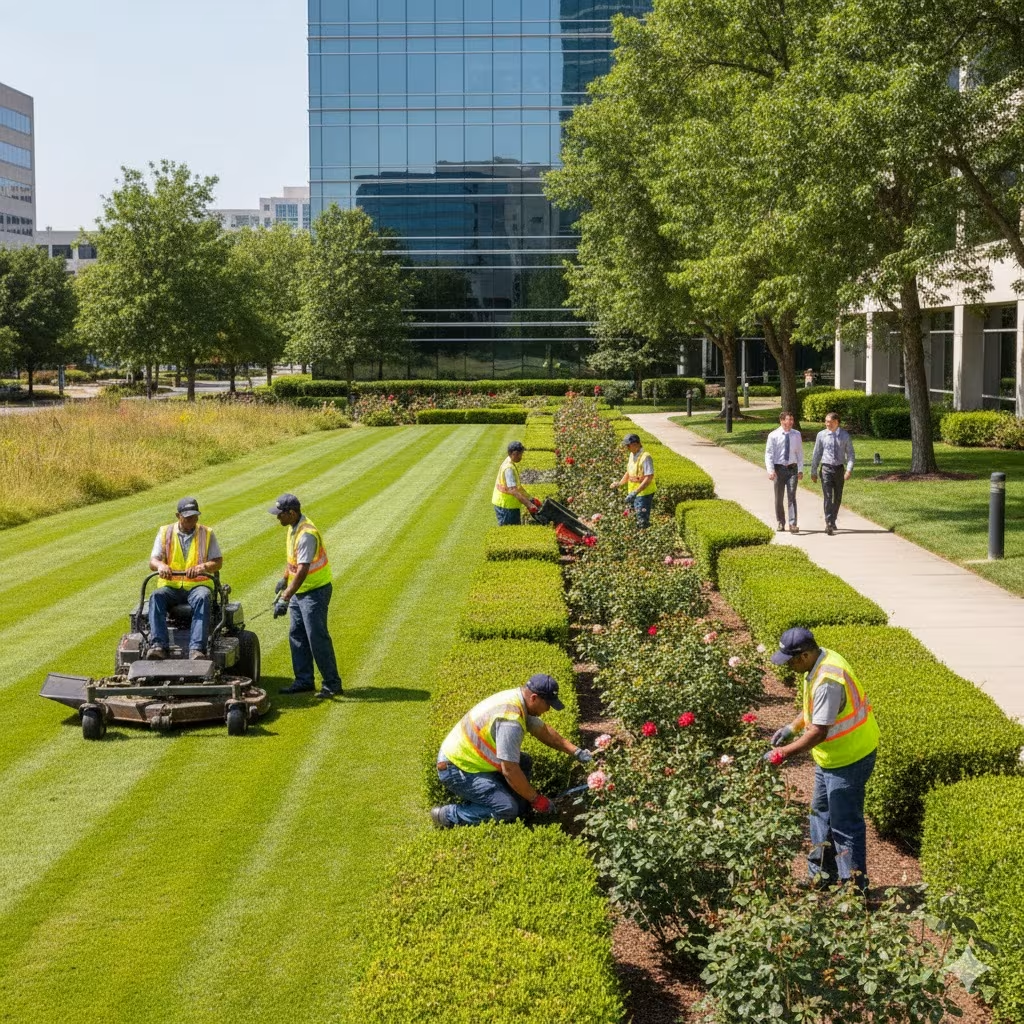
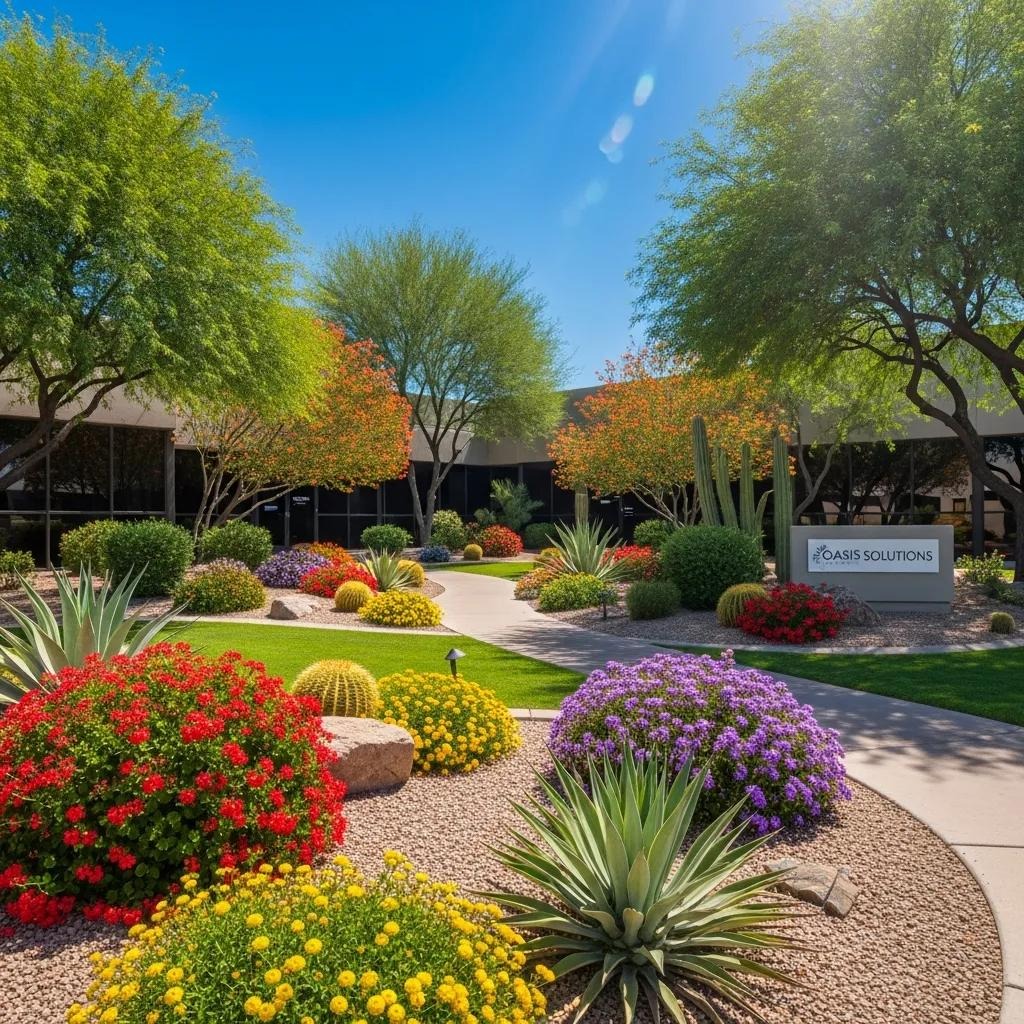
A well-kept commercial landscape is more than curb appeal — it’s a business asset that protects value, lowers risk, and keeps operations running smoothly for Arizona properties. Below, we define commercial landscape maintenance, explain why it’s especially important in an arid climate, and show how consistent, professional care produces measurable results for owners and property managers. You’ll see the primary advantages—property value, curb appeal, safety, and sustainability—followed by cost and operational savings, people-centered impacts, recommended service cadence, and tips for choosing the right provider. Throughout, we emphasize practical Arizona strategies like water-wise plant selection, irrigation audits, and artificial turf options that lower lifetime costs. At the end, we note Sunburst Landscaping’s local commercial services and credentials and outline clear next steps for getting a consultation or quote.
What Are the Top Benefits of Regular Commercial Landscape Maintenance?
Regular commercial landscape maintenance keeps plants healthy, hardscape sound, and public areas welcoming by grouping routine tasks—mowing, pruning, irrigation tuning, fertilization, pest control, and seasonal cleanup—into a coordinated program. That preventive approach stops small problems from becoming big ones, preserves visual standards, and delivers practical business outcomes: stable property value, fewer emergency repairs, and a safer site. In Arizona, those benefits also include significant water savings through optimized irrigation and appropriate plant selection. The sections that follow break these benefits down and show how they translate into measurable results like better tenant retention and easier leasing.
The top benefits of regular maintenance are summarized here:
- Property Value Preservation and Uplift: Well-maintained grounds boost marketability and can raise perceived asset value.
- Improved Curb Appeal and First Impressions: Clean entries and healthy plantings shape customer and tenant perception.
- Safety and Liability Reduction: Ongoing care reduces trip, slip, and visibility risks.
- Operational Cost Savings: Preventive work lowers emergency repairs and extends equipment lifecycles.
- Water Efficiency and Sustainability: Smart irrigation and drought-tolerant plants cut water use.
- Employee and Customer Experience: Attractive outdoor spaces lift morale and encourage longer visits.
These benefits make a clear business case for scheduled maintenance. The next section explains how routine care supports commercial property value in practical terms.
How Does Landscape Maintenance Boost Commercial Property Value?
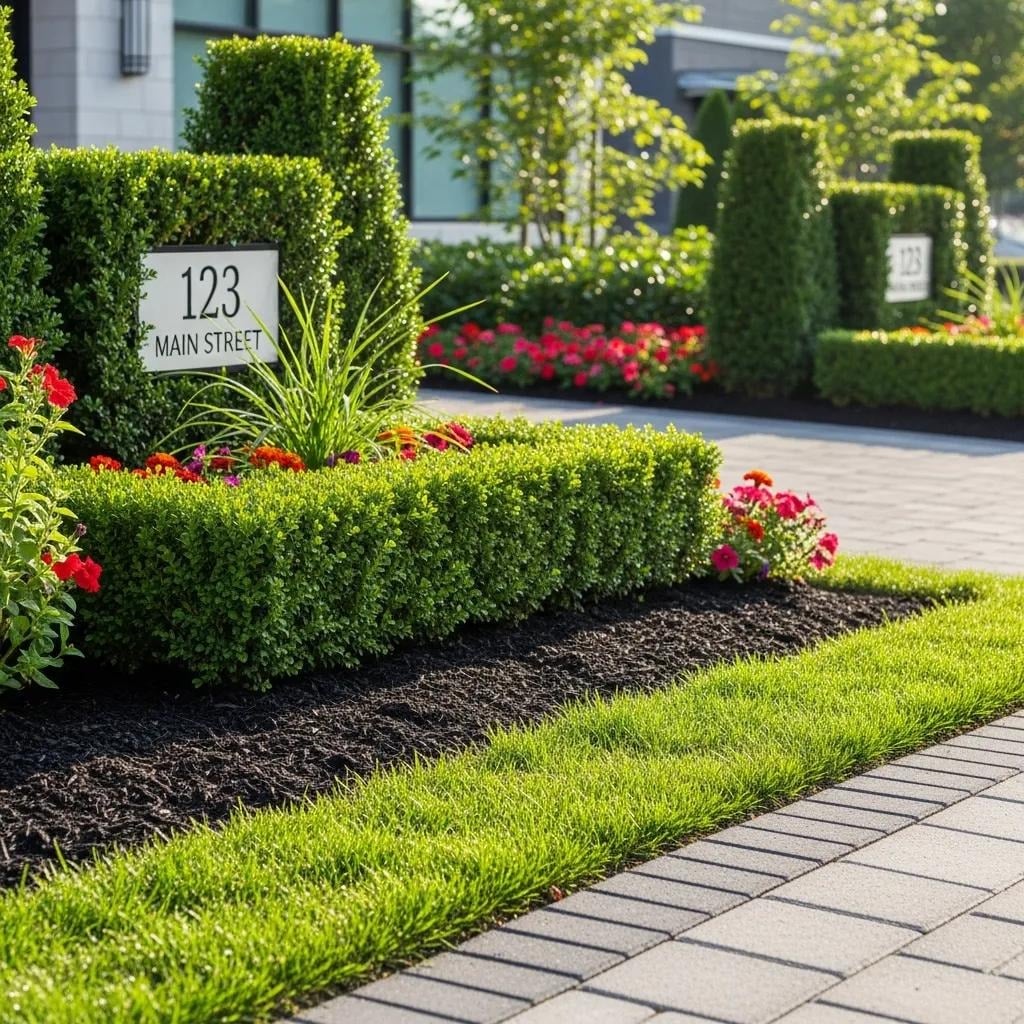
Consistent maintenance protects visual appeal, prevents deferred repair costs, and signals competent asset management to buyers and tenants. Prospective tenants and purchasers read upkeep as a proxy for property stewardship—well-maintained grounds can support higher rents or sale prices. Appraisal practice and market studies often estimate a 5–15% perceived value uplift for properties with strong curb appeal, reflecting both buyer confidence and reduced near-term capital needs. In Arizona, keeping irrigation efficient and plants healthy is critical to protecting landscaping from heat and drought. Framing maintenance as an investment, not just a cost, helps property owners focus on long-term return and preserve curb appeal tactics that influence perception and value.
Before we dive into curb-appeal tactics, this quick comparison shows how key maintenance actions link to commercial outcomes.
| Maintenance Factor | Commercial Impact | Typical Outcome |
| Professional Maintenance | Property value increase | 5–15% uplift in perceived value |
| Irrigation Optimization | Reduced water costs | 20–40% water savings potential |
| Seasonal Cleanup | Deferred repair avoidance | Fewer emergency repairs |
| Regular Pruning & Plant Health | Extended plant life | Lower replanting costs |
This table highlights measurable connections between maintenance tasks and financial results, reinforcing the ROI case for routine programs and leading into specific curb-appeal actions.
In What Ways Does Maintenance Enhance Business Curb Appeal?
Maintenance sharpens curb appeal by keeping entrances, signage, and sightlines tidy and welcoming—an important signal of brand care and operational reliability. Simple visual elements—neatly trimmed hedges, clean walkways, visible signage, fresh mulch, and healthy turf or groundcover—communicate attention to detail. Targeted tasks such as edging, selective pruning, weed control, and seasonal color swaps deliver immediate visual improvements and can affect customer behavior, from which door they use to how long they stay. In Arizona, selecting drought-tolerant palettes and groundcover alternatives preserves beauty while cutting ongoing water demand. The next section explains how those curb-appeal efforts also lower safety and liability exposure.
How Does Commercial Landscape Maintenance Improve Safety and Reduce Liability?
Routine commercial landscape maintenance reduces hazards and liability by addressing common accident causes—uneven surfaces, overgrown vegetation, blocked signage, and irrigation leaks—through scheduled, documented inspections and corrective work. That risk-reduction approach prevents incidents before they happen, which supports insurance defenses and regulatory compliance. In Arizona, maintenance also focuses on fire-risk reduction—removing fuel loads and managing pest issues—to avoid property damage and tenant disruption. Below we list specific hazards maintenance prevents and the actions that mitigate them.
Regular maintenance prevents several common safety hazards:
- Trip and Slip Hazards: Remove debris, repair uneven paving, and maintain non-slip surfaces to lower fall risk.
- Obstructed Sightlines and Signage: Prune and trim plantings so pedestrians, drivers, and cameras have clear visibility.
- Pooling and Drainage Failures: Grade and clean drains on a schedule to prevent standing water and slips.
- Pest and Fire Risks: Remove dead wood, thin overgrown brush, and address infestations with targeted treatments.
These preventive measures reduce liability and protect people on site. The following subsection explains how maintenance secures clear pathways and visibility through specific tasks.
What Safety Hazards Does Regular Maintenance Prevent?
Regular maintenance eliminates the environmental precursors to accidents and keeps safety systems working. Debris and broken sidewalks cause trips; overgrown plants can hide walkways and emergency signs—issues corrected with scheduled cleaning and trimming. Irrigation checks stop leaks that create slick surfaces, and grading inspections prevent water accumulation. In Arizona, removing dead or heat-stressed vegetation reduces fire risk. Together, these actions form a defensible safety protocol that protects occupants and limits liability.
How Does Landscape Care Ensure Clear Pathways and Visibility?
Landscape care preserves clear routes and visibility by combining pruning, edging, lighting checks, and drainage maintenance. Regular vertical-clearance work protects sightlines for drivers and cameras; defined edging keeps plantings off walkways to lower trip points; and lighting inspections during landscape rounds keep dusk-to-dawn visibility consistent. Addressing grading and drainage as part of maintenance prevents pooling that can hide hazards. Clear pathways and visibility come from coordinated tasks that tie aesthetics directly to safety and functionality.
What Operational and Cost Savings Can Arizona Businesses Expect from Landscape Maintenance?
Operational and cost savings come from fewer emergency repairs, longer-lasting assets, and lower utility bills—especially water—in Arizona’s climate. Preventive maintenance keeps irrigation systems, trees, and turf in good condition so assets meet or exceed expected lifespans, reducing replacement frequency. Smart irrigation audits and scheduling can yield notable water savings, and where appropriate, commercial artificial turf can reduce both water use and mowing costs. Below, we explain how preventative care avoids larger repairs and provide a turf comparison to help site teams decide what works best locally.
Preventative landscape care centers on frequent inspections, small repairs, and seasonal tuning:
- Irrigation Audits and Tuning: Find leaks, inefficient heads, and scheduling problems to cut water waste.
- Routine Pruning and Structural Care: Prevent limb failure and root issues that otherwise lead to costly removals.
- Surface and Hardscape Maintenance: Seal cracks and correct grading to avoid major concrete or asphalt repairs.
These practices lower total cost of ownership and lead into the turf comparison below, which weighs water and lifecycle factors.
| Option | Water Use | Maintenance Frequency | Typical Lifespan | Cost Consideration |
| Natural Turf | High (seasonal watering) | Weekly mowing, seasonal care | 10–20 years with care | Lower upfront, higher ongoing costs |
| Artificial Turf (Commercial) | Minimal to none | Occasional cleaning, infill upkeep | 15–20 years | Higher upfront, lower long-term water and labor costs |
| Drought-Tolerant Groundcover | Low | Minimal, seasonal checks | 10–20 years | Moderate installation, low water costs |
This comparison clarifies how artificial turf and water-wise plantings shift spending from recurring water and labor to a higher initial investment with lower lifecycle costs.
How Does Preventive Landscape Care Avoid Costly Repairs?
Preventative care catches small failures—leaky valves, root girdling, early erosion—before they escalate into major repairs. Regular inspections let crews replace worn irrigation parts, shore up drainage, and treat localized pest or disease problems while they’re still small. For trees and large shrubs, structural pruning prevents limb failures that could damage buildings or vehicles and lead to expensive removals. Documented maintenance records also help justify budgets and support warranty or insurance claims if problems occur. In short, scheduled routines convert uncertain emergency expenses into predictable, lower-cost maintenance cycles.
Why Is Sustainable Landscaping Important for Water Conservation in Arizona?
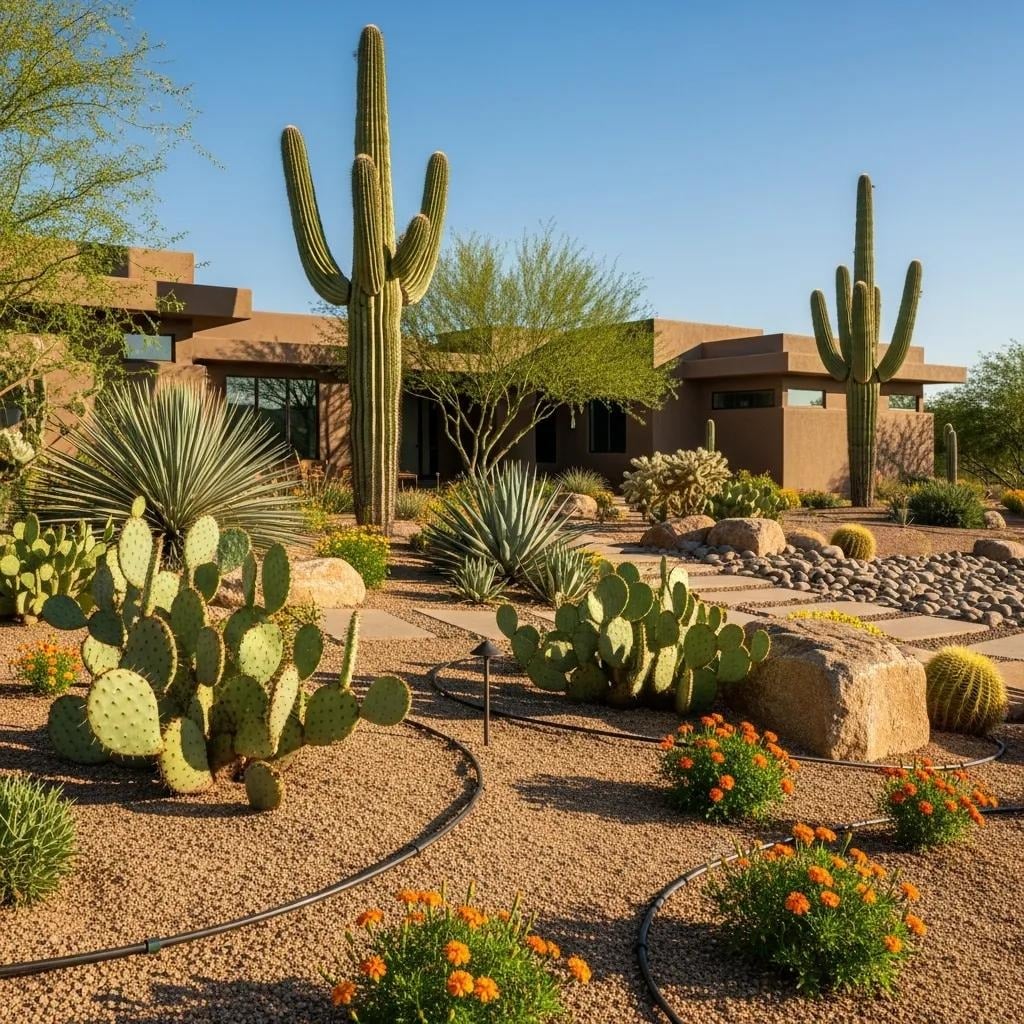
Sustainable landscaping is essential in Arizona because water is limited and efficient design reduces operating costs while meeting local conservation expectations. Effective techniques include drought-tolerant plant palettes, mulching to limit evaporation, smart controllers and soil moisture sensors to dial in irrigation, and selective use of artificial turf to eliminate recurring irrigation in high-traffic areas. Industry studies and local conservation programs show that pairing smart plant selection with irrigation optimization strikes the best balance of beauty and water savings. For commercial sites, sustainability measures also support corporate responsibility goals and can be shared with tenants to highlight stewardship.
How Does Commercial Landscaping Impact Employee Morale and Customer Experience?
Landscaping shapes the environments where employees and customers spend time—well-designed green spaces boost productivity, wellbeing, and brand impressions. The biophilic effect is real: access to vegetation, shade, and outdoor amenities reduces stress, improves focus, and encourages informal interaction. For workplaces and retail centers, thoughtful landscape design increases dwell time, enhances perceived safety, and helps a brand stand out. The next subsection summarizes productivity benefits backed by research and then explains how design choices create inviting spaces.
Research links green workplaces to measurable productivity and wellness benefits:
- Improved Focus and Reduced Stress: Views of plants and nature support concentration and recovery from mental fatigue.
- Reduced Absenteeism: Healthier outdoor spaces support staff wellbeing and retention.
- Enhanced Customer Perception: Attractive landscaping raises perceived quality and trust.
These human-centered benefits show why preserving design intent through maintenance is an investment in performance and experience.
What Are the Productivity Benefits of Green Commercial Spaces?
Green commercial spaces help people recharge and refocus, which translates to better productivity and satisfaction. Studies and workplace surveys show measurable gains where employees have views or access to landscaped areas, and those benefits reduce turnover and boost engagement. Practical features—shaded seating, walking paths, outdoor meeting spots—create short restorative breaks that support mental health and collaboration. Regular maintenance keeps these features usable and ensures their productivity benefits endure over time.
How Does Landscape Design Create a Welcoming Business Environment?
Good landscape design welcomes visitors with clear entrances, purposeful sightlines, shaded seating, accessible paths, and plant palettes that reflect a property’s character while fitting the local climate. Thoughtful integration of hardscape and softscape guides visitors, provides comfort, and highlights focal points like signs and entries. In Arizona, planting heat-tolerant shade trees and placing seating in cooler microclimates increases usability while reducing irrigation needs. Maintenance preserves the designer’s intent—without it, features decline and the welcoming environment fades, which brings us back to scheduling and frequency guidelines for preservation.
How Often Should Commercial Landscape Maintenance Be Performed for Optimal Results?
Frequency depends on task, season, and property use, but a task-based schedule combining weekly, monthly, and seasonal activities produces consistent results in Arizona. A practical model assigns aesthetic tasks (mowing, litter removal) to weekly cycles, system checks and soil work to monthly or seasonal intervals, and deep audits (irrigation evaluations, tree inspections) to quarterly or annual reviews. Regular routines reduce emergency interventions and keep irrigation, plant health, and safety systems performing predictably. Below, we outline essential year-round components and how seasonal tasks align with Arizona’s climate.
Key year-round elements include irrigation management, pruning, turf or groundcover care, litter removal, and monitoring. Each task links directly to plant health, safety, or resource efficiency: irrigation checks conserve water, pruning preserves sightlines and structure, and reporting gives property managers the data to adjust frequency as conditions change. Prioritizing these components keeps landscapes attractive and functional year-round and prepares the site for seasonal transitions covered next.
| Task | Recommended Frequency (Arizona-specific) | Purpose/Benefit |
| Litter Removal & Walkway Clearing | Weekly | Maintain safety and appearance |
| Mowing / Turf Upkeep | Weekly to biweekly (growing season) | Preserve turf health and aesthetics |
| Irrigation Audit & Controller Check | Monthly during warm months; quarterly otherwise | Optimize water use and detect leaks |
| Pruning & Vertical Clearance | Quarterly | Maintain sightlines and plant structure |
| Seasonal Deep Clean & Mulch | Twice annually (spring/fall) | Reduce weeds, conserve moisture |
This schedule helps property teams plan predictable maintenance cycles and supports the final section on professional services and next steps.
What Are the Essential Components of Year-Round Commercial Landscape Care?
Year-round care includes irrigation management, plant-health monitoring, turf or groundcover maintenance, litter removal, seasonal color and mulch refresh, and inspection documentation. Each component serves a clear purpose: irrigation management saves water; health monitoring stops pest and disease spread; and documentation provides accountability for budgets and liability. In Arizona, emphasizing water audits and drought-tolerant species selection is critical to long-term success. Coordinated scheduling of these tasks keeps presentation and performance consistent and improves landscape resilience.
How Do Seasonal Maintenance Tasks Support Landscape Health?
Seasonal tasks align maintenance intensity with plant growth cycles and climate stresses: spring focuses on cleanup, soil amendments, and planting; summer emphasizes irrigation tuning and heat protection; fall targets pruning and mulch refresh ahead of cooler months; winter reduces activity but still requires irrigation adjustments and periodic inspections. These transitions prevent shock, lower pest pressure, and maintain aesthetics when plants are vulnerable. For Arizona sites, adjusting irrigation schedules and choosing cooler maintenance windows preserves plant health and conserves water. Following seasonal plans keeps landscapes resilient and cost-effective over time.
Why Choose Professional Commercial Landscape Maintenance Services in Arizona?
Hiring a professional brings technical skill, local know-how, and the logistical capacity needed to deliver consistent results that DIY or ad-hoc approaches rarely match. Professionals supply trained crews, licensed contractors, repeatable maintenance protocols, and the ability to perform specialized services—irrigation audits, commercial artificial turf installs, and design-build projects—aligned with Arizona conditions and regulations. A pro provides a single point of accountability for safety, scheduling, and quality control, simplifying vendor management for property teams. The next sections highlight Sunburst Landscaping’s local credentials and outline how businesses can request consultations and quotes.
What Makes Sunburst Landscaping a Leader in Arizona Commercial Landscaping?
Sunburst Landscaping is a local commercial landscaping provider serving Phoenix, Scottsdale, Paradise Valley, and Peoria with design-build projects, commercial artificial grass solutions, and full maintenance programs. In addition to hands-on services, the company operates as an information hub and lead source; public records list Arizona ROC licenses (108581 – A and 065944 – CR21) for commercial work. Leadership recognition, such as the 2023 ALCA Lifetime Achievement Award for CEO Don Gabbard, underscores our involvement in the local industry. Those credentials support Sunburst’s ability to deliver water-efficient, Arizona-ready solutions and to manage ongoing maintenance that protects client assets.
How Can Businesses Request a Consultation or Quote for Landscape Maintenance?
To request a consultation or get a quote, gather basic site details—property type, approximate acreage, current maintenance concerns, and preferred schedule—and contact Sunburst Landscaping to arrange a site visit and scope review. A professional consultation typically includes a site assessment, an irrigation and plant-health audit, a discussion of goals (budget, water targets, aesthetic priorities), and a timeline for a written proposal. After the site visit, expect a proposed scope with phased options (maintenance-only, design-build, or artificial turf conversion) and a timeline for receiving a detailed quote. Requesting a consultation is the straightforward way to turn landscape strategy into an actionable maintenance plan with predictable savings.
- Step 1: Gather site basics and prioritize maintenance needs.
- Step 2: Schedule a professional consultation for irrigation, plant, and hardscape inspection.
- Step 3: Review a written proposal that outlines scope, frequency, and phased options.
These steps set clear expectations for evaluating and procuring professional landscape maintenance for Arizona commercial properties.
Frequently Asked Questions
What types of plants are best suited for Arizona’s climate in commercial landscaping?
In Arizona’s arid climate, drought-tolerant and native plants perform best. Species like desert marigold, agave, and palo verde are adapted to heat and need less water. Using succulents and xeriscaping principles can create attractive, low-water landscapes that lower maintenance costs while staying resilient under local conditions.
How can businesses measure the ROI of their landscape maintenance investments?
Track key performance indicators to measure ROI: property value changes, fewer emergency repair bills, and lower utility costs from efficient irrigation. Also monitor tenant retention and customer foot traffic to see how landscaping affects business performance. Regular assessments and comparisons over time reveal the financial impact of a maintained landscape.
What are the environmental benefits of sustainable landscaping practices?
Sustainable landscaping improves biodiversity, reduces water use, and enhances soil health. Native plants and efficient irrigation systems shrink a property’s ecological footprint. Additionally, sustainable landscapes help mitigate urban heat, improve air quality, and provide habitat for local wildlife—benefits that align with corporate responsibility goals.
How does landscape maintenance affect energy efficiency in commercial buildings?
Properly maintained landscaping can lower building energy use. Strategically placed trees and shrubs create shade, cutting cooling loads during hot months and improving indoor comfort. Healthy plantings also reduce heat absorption around buildings. Regular maintenance keeps these systems effective and ensures long-term energy savings.
What should businesses consider when choosing a landscape maintenance provider?
Look for experience, local knowledge, and a full range of services. Choose companies with commercial landscaping experience in arid climates, proven sustainability practices, relevant certifications, and strong customer reviews. A good provider will offer tailored plans that match the property’s needs and long-term goals.
How can regular landscape maintenance improve employee productivity?
Maintained green spaces make the workplace more pleasant, reducing stress and improving focus. Features like shaded seating and walking paths encourage restorative breaks, boosting mental wellbeing and collaboration. Investing in landscape maintenance supports a healthier workplace culture and can lead to higher productivity and retention.
Conclusion
Regular commercial landscape maintenance matters for Arizona businesses. It preserves property value, improves curb appeal, reduces safety risks, and lowers operating costs—especially water bills. Investing in professional care keeps landscapes attractive and functional, supports employee wellbeing, and protects your asset over time.
Ready to take the next step? Request a consultation with our team to explore tailored maintenance solutions that make your property work harder for you.