
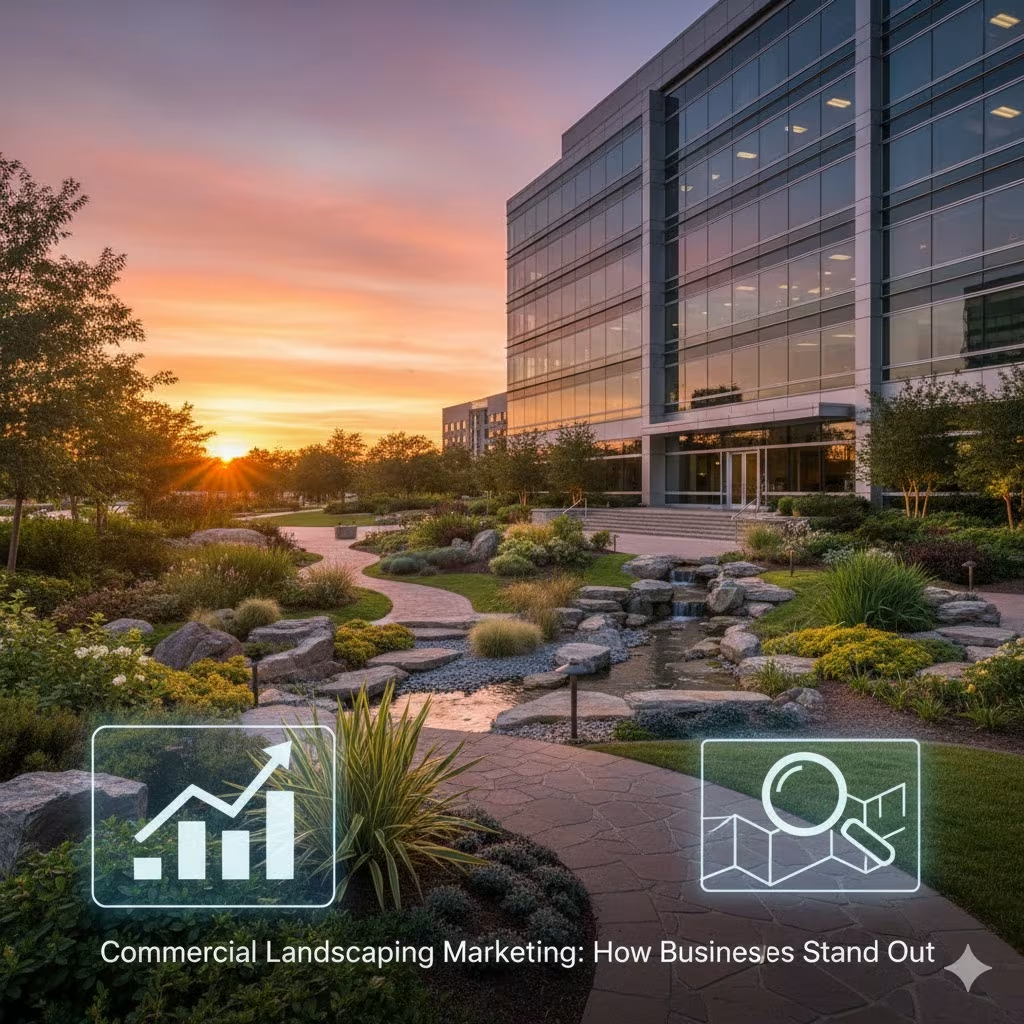
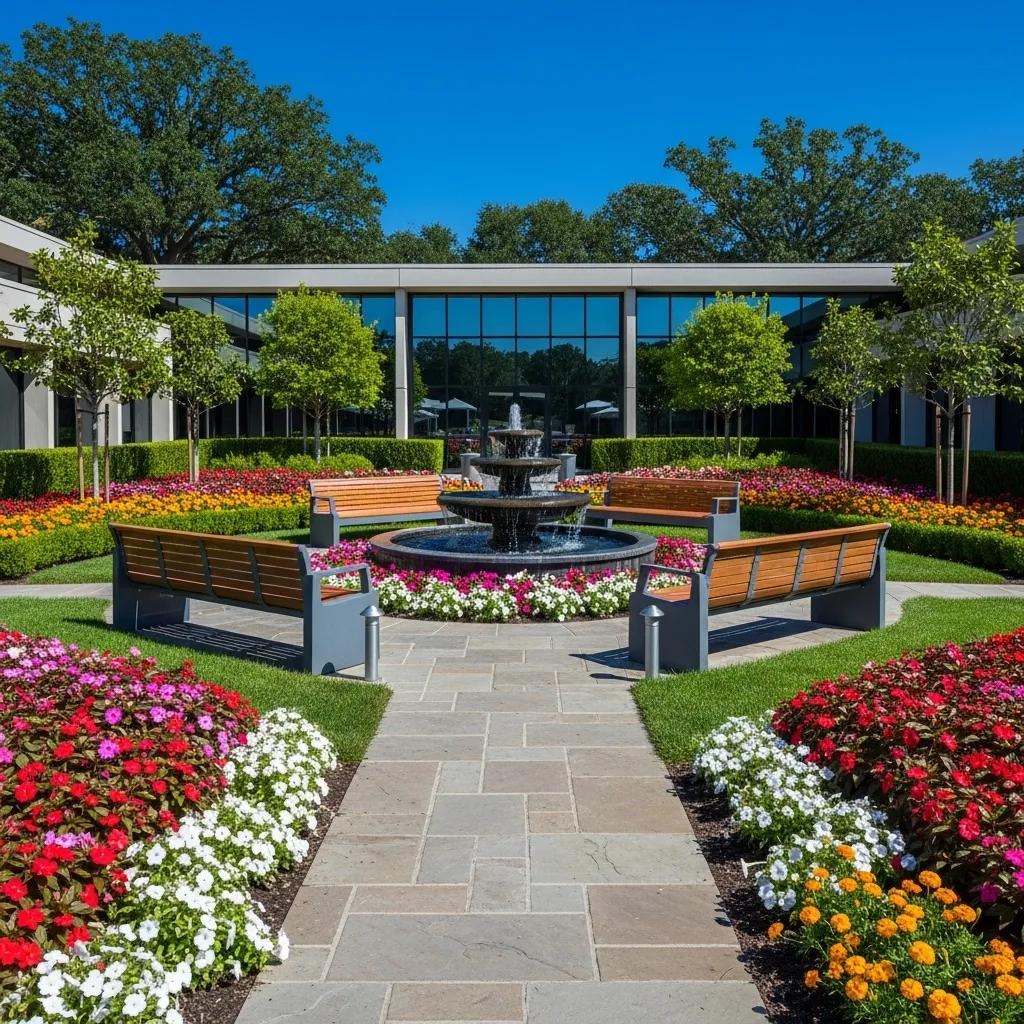
Commercial landscaping isn’t just about plants and hardscape — it’s a measurable business tool. The right site design, materials, and maintenance plan improve curb appeal, cut operating costs, and create amenity-driven spaces that draw customers, tenants, and visitors. This guide shows how commercial landscaping works both as a service and a marketing channel. You’ll find practical lead-generation tactics, core branding pillars, content strategies, product-level advantages, 2024 trends, and ways to measure performance. Read on to learn which channels reliably deliver B2B and B2C commercial leads, how to position sustainable or low-maintenance solutions as differentiators, and which KPIs demonstrate landscaping ROI. Examples include content that converts property managers, local-discovery tactics, and ways to promote product benefits like artificial turf and advanced drainage as unique selling points. The article is organized into six focused sections: lead channels and local SEO, brand identity through sustainability and curb appeal, content that builds thought leadership, how Sunburst’s experience and tech support growth, 2024 trends, and measurement best practices for continual improvement.
Online Lead Generation: Website Conversion Design for B2B Marketing
This paper reviews why the corporate website is a primary channel for connecting with business buyers and generating leads. It summarizes research on conversion-focused site design and how companies can shape their online presence to attract decision-makers.
What Are the Most Effective Lead Generation Strategies for Commercial Landscaping Businesses?
Winning commercial leads combines strong local visibility, targeted paid outreach, and relationship-based referrals. Local SEO makes you discoverable where facility managers search, paid channels capture immediate quote intent, and partnerships with property managers or contractors land larger, bundled projects. The exact mix depends on budget, target verticals (hospitality, schools, HOAs, etc.), and your sales capacity — but every approach should drive measurable quote requests and portfolio review conversations. Below are the primary channels and why they matter for commercial landscape firms.
Top lead-generation channels for commercial landscapers:
- Local SEO: Optimize business profiles and service pages to capture city + service searches that indicate commercial intent.
- PPC and search ads: Target high-intent queries for quotes and consultations with focused ad copy and bidding.
- Referral programs and partnerships: Build relationships with property managers, architects, and general contractors to secure larger projects.
These channels are most effective when paired with conversion-focused landing pages and clear contact actions; the next section explains how local SEO increases client acquisition.
How Does Local SEO Boost Commercial Landscaping Client Acquisition?
Local SEO helps commercial prospects find you by matching your service pages and business profiles to the phrases decision-makers use — for example, city-specific commercial turf or maintenance searches. Tuning your Google Business Profile, crafting location landing pages, and using service schema all improve visibility for these searches and create direct paths into quote forms. Soliciting and responding to reviews builds trust and can raise click-through rates for higher-value bids. Consistent citations across industry directories and structured data help search engines recognize your commercial services, making organic discovery a steady source of qualified leads. Paid channels then pick up prospects who are ready to act.
Which Digital Advertising Channels Drive Commercial Landscaping Leads?
PPC captures users actively searching for quotes; LinkedIn and targeted display reach facility managers and procurement teams who may not be searching direct service terms. PPC campaigns that target quote-intent keywords perform best when paired with landing pages that highlight case studies and commercial warranties. LinkedIn ads and account-based marketing let you reach specific companies and job titles, improving lead relevance, while geofencing and social retargeting re-engage prospects who visited your portfolio. In practice, budget more toward PPC for immediate capture and toward LinkedIn for longer pipeline development. Creative that highlights measurable outcomes — lower maintenance costs, water savings, fast installs — raises conversion rates.
In competitive markets, digital marketing helps organizations discover and attract new customer segments efficiently.
Modern Lead Generation: Digital Marketing Strategies for Enterprise Growth
This study discusses how organizations use digital channels to reach new customer segments and the challenges of extracting reliable data-driven insights. It emphasizes the importance of understanding customers and targeting profitable audiences to improve the bottom line.
Before we look at conversion mechanics, compare channel characteristics below to guide budget decisions.
Different lead channels suit different goals and budgets:
| Channel | Cost / Scale | Lead Quality / Recommended Use Case |
|---|---|---|
| Local SEO | Low ongoing cost, high local reach | High-quality leads for local commercial projects; best for long-term organic capture |
| PPC (Search) | Medium-high cost per click | High-intent leads for immediate quote capture and seasonal promotions |
| LinkedIn / ABM | Higher CPM, targeted reach | Best for enterprise and facility-manager outreach for large contracts |
| Referral & Partnerships | Low cost, relationship-driven | Highest lead quality and contract value for projects with specification cycles |
This comparison clarifies where to invest depending on immediate needs versus pipeline growth; next, we show how brand identity amplifies these channels.
How Can Commercial Landscaping Businesses Build a Strong Brand Identity?
A clear brand identity links design outcomes and operational reliability to client goals — curb appeal, tenant satisfaction, compliance, and sustainability — so landscaping is seen as a value center rather than a commodity. Core brand pillars should include measurable performance (durability, warranties), sustainability (water conservation and low maintenance), and reliability (on-time installs, effective drainage). Consistent visuals and project storytelling bring these pillars to life across proposals, service pages, and sales conversations. Below are practical brand-building steps landscaping firms can use.
Brand identity pillars for commercial landscapers:
- Performance and reliability: Lead with measurable details like warranty terms and maintenance plans.
- Sustainability and cost savings: Share specific water-use and lifecycle maintenance benefits.
- Visual consistency and storytelling: Use before/after photos and repeatable templates to show proven results.
Integrate these pillars into sales collateral and online profiles so every lead channel communicates the same value. The next section explains why sustainability is central to this approach.
Why Is Sustainability a Key Branding Element in Commercial Landscaping?

Sustainability matters to commercial buyers because it directly affects operating budgets, compliance, and ESG reporting. Water-wise designs, drought-tolerant plantings, and artificial turf reduce long-term costs and create predictable maintenance schedules that procurement teams can budget around. Messaging that quantifies water savings or maintenance reductions converts better than vague “green” claims; tying claims to third-party metrics or lifecycle comparisons adds credibility. Position sustainability as both a cost-saver and a reputational benefit to strengthen your brand story — which brings us to curb appeal.
How Does Enhancing Curb Appeal Help Businesses Stand Out?
Curb appeal shapes immediate impressions that affect customer visits, tenant retention, and perceived property value — it turns landscaping from an expense into a business tool. Targeted upgrades — consistent turf zones, clean hardscapes, focused lighting, and branded planters — deliver big visual impact with minimal disruption and can be scheduled around business hours.
Make curb-appeal work measurable: track metrics like visitor counts, occupancy, or tenant satisfaction before and after installations so proposals connect landscaping to client KPIs. Concrete curb-appeal checklists help teams convert interest into proposals and feed case studies that prove results.
What Content Marketing Strategies Help Commercial Landscapers Establish Thought Leadership?
Content that positions a landscaping firm as a trusted advisor mixes outcome-driven case studies, data-rich insights, and targeted distribution to reach facility managers, developers, and property owners. Educational assets that quantify ROI — maintenance savings, water reduction, safety improvements — help decision-makers justify capital or operating expenses.
Repurpose strong case studies into short social videos and LinkedIn posts to reach gatekeepers and support paid retargeting. Prioritize the formats below for high impact.
- Case studies with metrics: Show the challenge, solution, and measurable outcomes to support procurement decisions.
- Before-and-after galleries: Visual proof that reduces perceived risk for buyers.
- Trend reports and data pieces: Use current market stats to inform strategic buyers and capture search interest.
Use a content calendar to rotate these formats and ensure each asset addresses a specific buyer-stage, which leads into case study design that actually converts.
How Can Case Studies and Before-and-After Content Attract Commercial Clients?
Case studies work when they tell a clear story: the client’s problem, the solution delivered, and quantifiable results — for example, water saved, maintenance costs cut, or tenant satisfaction improved — backed by strong visuals and client quotes when possible.
A conversion-ready case study follows this simple template: challenge → solution (design or product) → measurable outcome → next-step CTA (portfolio review or quote request). Before-and-after galleries should include consistent framing, captions with scope and timeline, and notes on business impact to support both persuasion and SEO. When case studies target a specific vertical — hotels, schools, athletic fields — they become repeatable assets for targeted outreach.
Well-structured case studies feed social and paid campaigns that expand reach to property decision-makers.
Which Social Media Tactics Are Most Effective for Commercial Landscaping Marketing?
Use LinkedIn for B2B engagement and Instagram/Facebook for visual storytelling and local discovery. Promote top-performing case studies to reach the right job titles and regions.
On LinkedIn, share project summaries, technical notes about materials like commercial artificial turf, and data-focused trend content that resonates with facility managers and procurement teams.
On Instagram and Facebook, post high-quality before-and-after photos, short project walkthroughs, and behind-the-scenes content that humanizes crews and demonstrates safety and quality practices.
Keep a steady posting cadence and repurpose long-form assets into short social posts to keep channels active while driving traffic to conversion-focused pages. Amplified social content builds credibility and becomes a retargeting pool for paid campaigns.
How Does Sunburst Landscaping’s Experience and Technology Support Business Growth?
Sunburst Landscaping’s local recognition and product capabilities show how vendor attributes become marketing advantages for commercial clients. Based in Peoria, Arizona, Sunburst pairs regional experience with product warranties and drainage innovations to lower client risk and support amenity-focused messaging. Artificial turf with multi-year warranties and MaxxFlow drainage technology deliver predictable, low-maintenance outdoor spaces that appeal to property managers who prioritize uptime and appearance. For commercial prospects, these strengths can be highlighted in proposals, case studies, and conversion landing pages to shorten decision cycles and improve quote-to-contract rates.
The table below compares surface and drainage options and the marketing benefits each provides for commercial clients.
| Surface / System | Key Attribute | Marketing-Facing Benefit |
|---|---|---|
| Commercial Artificial Turf | Long warranties (8–15 years) | Predictable appearance and lower lifecycle maintenance claims |
| MaxxFlow Drainage Technology | Rapid water dispersion | Usable, safe outdoor spaces sooner after storms; reduces liability messaging |
| Natural Turf | Natural aesthetics | Perceived environmental benefit but higher water and maintenance demands |
Use this comparison to help procurement teams weigh appearance, maintenance, and liability trade-offs. Sunburst supports conversion with free design sessions and easy quote requests that turn interest into concrete proposals. Highlighting these service hooks alongside targeted local SEO and paid campaigns improves conversion among commercial decision-makers.
What Are the Benefits of Artificial Turf for Commercial Properties?
Artificial turf lowers ongoing water and maintenance costs while providing a consistent look across high-traffic commercial sites. For property managers, predictable appearance reduces tenant complaints and simplifies maintenance planning. Long product warranties add purchasing confidence and ease procurement approvals. Artificial turf is especially useful in drought-prone areas, and its durability fits athletic fields, hotel courtyards, and HOA common spaces where uptime and safety matter. Pair warranty information with maintenance-savings estimates and use-case examples to strengthen proposals and speed procurement decisions.
How Does MaxxFlow Drainage Technology Enhance Commercial Landscaping Marketing?
MaxxFlow drainage improves surface usability by dispersing water quickly, cutting downtime after heavy rain and supporting safety messaging for public and commercial spaces. As a marketing point, drainage highlights reduced liability, more usable hours, and a better guest experience — all priorities for property owners and facility managers. Framed as an operational upgrade that complements durable surfacing, drainage helps position landscaping as an amenity investment rather than a cosmetic expense. Showing how MaxxFlow minimizes weather-related disruptions helps buyers see measurable value.
These product and service advantages strengthen proposals; next, we review trends shaping demand in 2024.
What Are the Key Industry Trends Shaping Commercial Landscaping Marketing in 2024?
In 2024, demand centers on sustainability, smart landscaping tech, and amenity-driven outdoor spaces that support corporate wellness and tenant attraction. These trends push marketing toward evidence-based claims and tech-enabled outcomes.
Buyers expect quantifiable water savings, monitoring data, and outdoor amenities that enhance employee wellbeing and customer experience.
Smart irrigation, sensors, and connected lighting reduce costs and create data marketers can use to demonstrate verified savings and operational improvements.
Below are the top trends commercial landscaping firms should reflect in services and marketing.
- Sustainability-first specifications: Clients want drought-resistant designs and predictable maintenance budgets.
- Smart landscaping integrations: Sensors and automation create measurable operational efficiencies.
- Corporate wellness and amenity development: Outdoor work and leisure spaces are competitive differentiators for tenants and staff.
These trends create clear content and proposition opportunities — quantified savings, tech-enabled guarantees, and wellness-focused portfolios — that support lead generation and buyer conversations.
How Is Sustainable Landscaping Driving Client Demand and Business Growth?
Sustainable landscaping attracts clients by lowering lifecycle costs, cutting water use, and supporting ESG goals that owners and corporate buyers increasingly require. Modeling expected water and maintenance savings in proposals helps decision-makers compare options objectively. Sustainable choices also help attract and retain tenants, especially where incentives or regulations favor low-water landscapes. Messaging that pairs conservation metrics with amenity value — durable, low-maintenance green spaces — resonates strongly with commercial buyers.
What Role Does Smart Landscaping Technology Play in Commercial Property Marketing?
Smart landscaping — automated irrigation, soil sensors, and connected lighting — turns operational savings into verifiable marketing claims by producing data on water reductions and uptime. Sharing dashboards or regular performance summaries creates ongoing client engagement and supplies material for case studies that quantify savings. Smart systems also open recurring-revenue services like monitoring contracts, which deepen client relationships and reinforce a tech-forward brand. Position smart tech as both an efficiency tool and a tenant amenity to appeal to facility managers balancing capex and occupant satisfaction.
Data from smart systems feeds measurement and optimization, which we cover next.
How Can Commercial Landscaping Businesses Measure and Improve Their Marketing Success?
Measure marketing by tracking visibility, engagement, conversions, and downstream revenue so activity maps to outcomes like quote-to-contract rates and property performance improvements. Key metrics include organic search impressions and clicks for commercial queries, quote-request conversion rates, lead quality assessments, and revenue per lead. Tools like Search Console, site analytics, and CRM tracking supply the data needed to refine channels and messaging over time.
The table below shows which metrics matter, how to measure them, and why they influence commercial landscaping growth.
| Metric | Definition | How to Measure / Why it Matters |
|---|---|---|
| Organic search impressions & clicks | Visibility for commercial service terms | Use Search Console and rank trackers to monitor discovery and content performance |
| Quote request conversion rate | Percentage of site visitors who request a quote | Track form submissions and A/B test landing pages to improve conversion efficiency |
| Lead-to-client conversion | Rate of leads that become paid projects | Use CRM pipeline tracking to evaluate channel ROI and adjust spend |
| Revenue per lead | Average revenue generated per qualified lead | Attribute closed deals to acquisition channels to optimize budget allocation |
Tracking these metrics supports iterative improvement. The next section explains how reviews and testimonials amplify performance.
Which Metrics Best Track Lead Generation and Brand Visibility?
Focus on organic visibility (impressions and clicks for commercial keywords), quote-request conversion rates, and lead quality (project size or close probability). Improving organic clicks and form conversion usually delivers the most scalable gains for commercial landscapers. Use multi-touch attribution to see which channels help close deals and which assets move prospects through the funnel. Regular reviews of these metrics guide decisions on SEO, paid spend, and content refreshes.
A strong online presence is essential for new landscaping businesses to turn theory into paying clients.
Online Presence for Landscaping Firms: Theory and Practical Guidelines
This thesis examines the theory behind creating an online presence for a landscaping startup and offers practical guidelines to implement those ideas effectively for client attraction and growth.
Better metrics are amplified by social proof; the section below describes practical ways to collect and use testimonials.
How Can Client Testimonials and Reviews Enhance Marketing Performance?
Testimonials and reviews boost local rankings, build trust with high-value prospects, and raise conversion rates on quote pages and business profiles when they include context and metrics. Ask for reviews soon after project completion and make leaving feedback simple. Place testimonials on landing pages, case studies, and profiles where they back up decision-stage messaging. Use short templates that ask clients to mention specific outcomes (maintenance savings, installation speed) and track CTR and conversion changes after publishing new testimonials so you can refine your outreach approach.
Frequently Asked Questions
What role does social media play in commercial landscaping marketing?
Social media increases brand visibility and helps you reach different audiences. LinkedIn works best for B2B interactions and sharing project insights and trends. Instagram and Facebook are ideal for visual storytelling — before-and-after images, project walkthroughs, and crew highlights. Consistent, high-quality posts drive website traffic and support lead generation when paired with targeted ads and case study promotion.
How can commercial landscaping businesses leverage client testimonials effectively?
Collect testimonials soon after project completion and encourage specifics: cost savings, timeline, or tenant feedback. Display them prominently on landing pages, case studies, and social posts. Testing the impact of new testimonials on click-through and conversion rates helps you refine the ask and placement for maximum effect.
What are the best practices for creating effective case studies in landscaping?
Follow a clear structure: client challenge, proposed solution, measurable outcome, and a next-step CTA. Add strong visuals and client quotes for credibility. Tailor case studies to industry verticals when possible and include data (savings, uptime, satisfaction) to help procurement teams justify decisions.
How can landscaping businesses measure the success of their marketing strategies?
Track KPIs like organic search impressions, quote-request conversion rates, and lead-to-client conversions using tools such as Google Analytics and a CRM. Regularly review these metrics to spot trends, reallocate budget, and optimize content and campaigns for better results.
What emerging trends should commercial landscaping businesses watch for in 2024?
Watch sustainability, smart landscaping technology, and amenity-focused outdoor spaces. Clients want drought-resistant designs, measurable water savings, and tech that proves operational improvements. Landscaping that enhances employee wellness and tenant experience is also becoming a competitive edge.
How can landscaping firms effectively utilize content marketing?
Build thought leadership with educational content: case studies, trend reports, and data-driven pieces. Show measurable outcomes like maintenance savings and water reductions. Repurpose long-form content into social posts and videos, and maintain a content calendar to keep messaging consistent across buyer stages.
Conclusion
When commercial landscaping is positioned around measurable outcomes — curb appeal, cost savings, and reliable performance — it becomes a growth driver, not just a line item. Use local SEO, targeted ads, and a clear brand identity to attract higher-quality leads. Emphasize sustainability and smart technologies to differentiate your services and make claims you can prove.
Ready to turn landscaping into a demonstrable business advantage? Contact our team today to schedule a consultation and discover how our tailored solutions can elevate your property and deliver measurable results.