
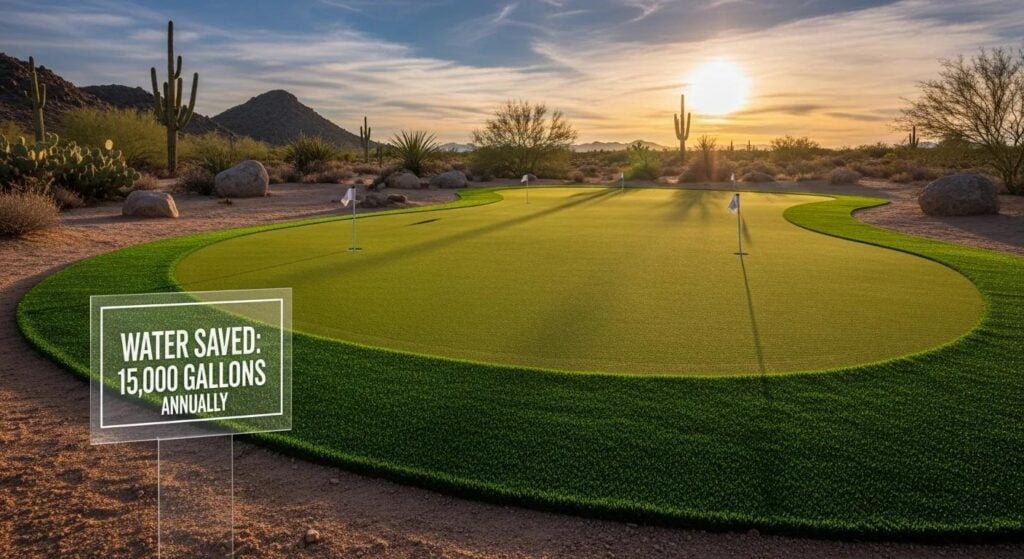
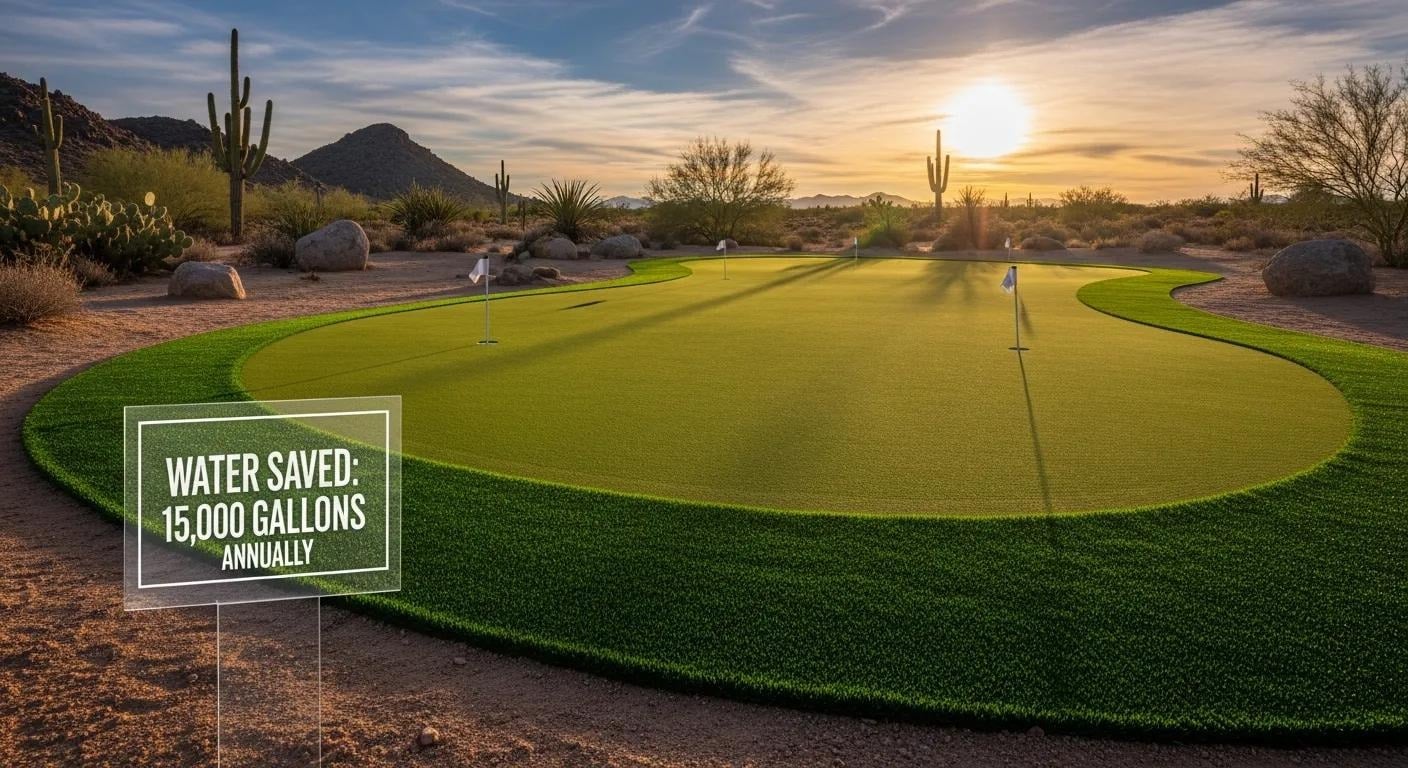
In desert environments, selecting between synthetic putting greens and natural grass is a consequential decision for homeowners and golf enthusiasts. This article evaluates both options with a focus on water conservation and cost efficiency. As water scarcity intensifies, quantifying turf-related water use and assessing installation and maintenance expenses is essential. The guide examines the benefits and constraints of performance in hot, dry conditions, addressing water use, cost, maintenance, and the specific advantages of synthetic turf in desert settings.
Comparison of Synthetic Putting Greens vs. Natural Grass in Desert Climates
A valid comparison assesses water consumption, lifecycle cost, and maintenance burden. Each turf type presents distinct advantages and limitations that will influence homeowner decisions and site-specific outcomes.
A practical comparison begins with a thorough site assessment. Identify sun and shade patterns, soil type, drainage characteristics, expected foot traffic, desired aesthetics, and any local ordinance or HOA restrictions. These baseline factors directly affect both installation complexity and long-term performance.
- Sun/shade exposure and microclimates
- Existing irrigation and drainage
- Expected use (practice, play, or decorative)
- Budget range and maintenance capacity
- Local regulations and permit needs
Water Conservation:
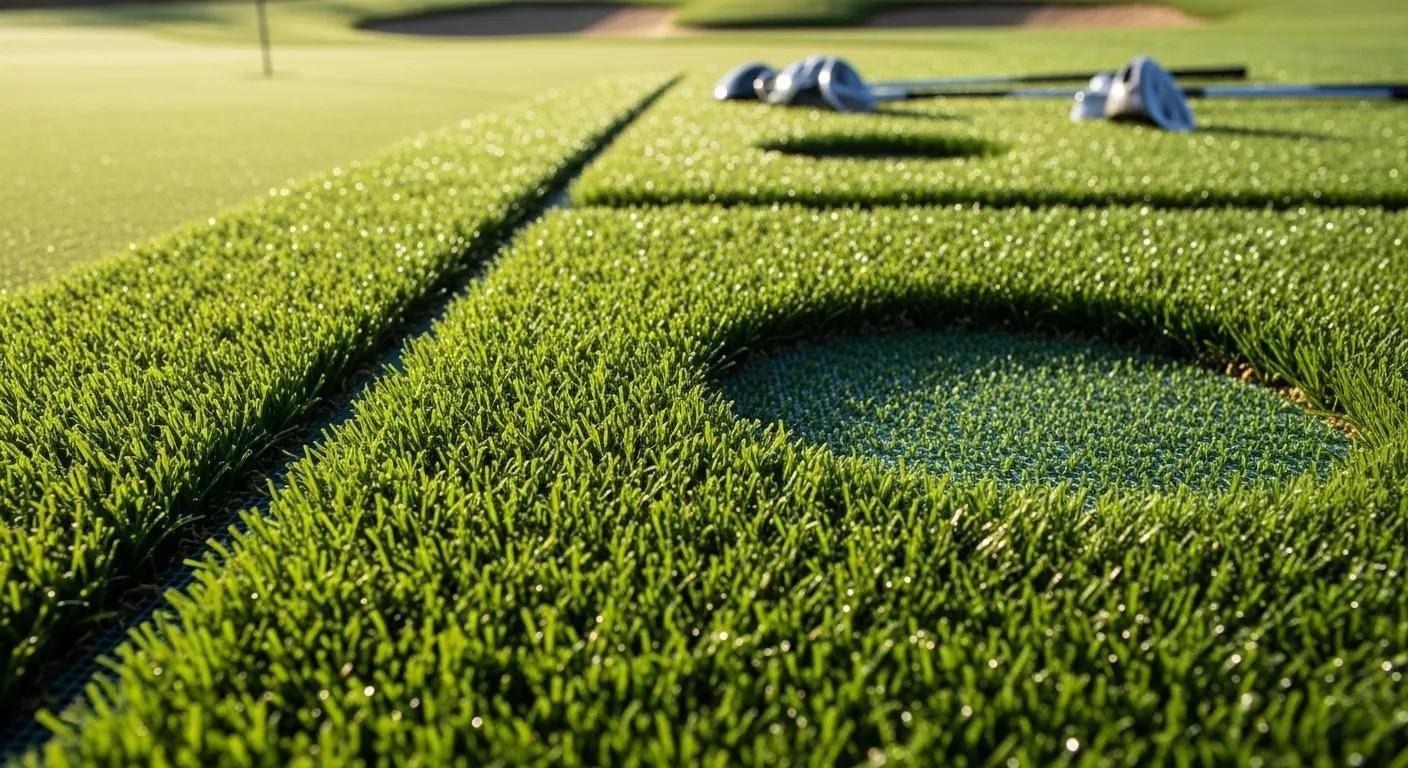
Water conservation is a central concern where water resources are limited. Synthetic turf requires no irrigation, enabling homeowners to reduce water bills by approximately 50% to 80% after conversion. This reduction lowers household water expenditures and aligns with regional water‑management objectives.
That emphasis on water and cost savings is particularly relevant in arid regions such as the U.S. Southwest, where sustainable turf management is a priority.
Desert Turfgrass: Water & Cost-Saving Strategies
In the low desert of the southwestern USA, limited rainfall and a hot, dry climate—compounded by rapid urbanization—intensify water scarcity. The study outlines water-saving management strategies that deliver economic benefits while substantially reducing water and other costs.
Pertinent water-saving management strategies for sustainable turfgrass in the desert US southwest, DD Serba, 2022
Natural grass, by comparison, has substantial water requirements, particularly during peak summer months. Maintaining a healthy lawn in arid climates can therefore require large volumes of water, undermining long-term sustainability. For homeowners prioritizing water conservation, synthetic putting greens are frequently the preferred option.
In practice, converting a portion of irrigated lawn to synthetic surfaces often allows property owners to reallocate existing irrigation to essential plantings, xeric beds, and trees that provide shade and urban cooling. Thoughtful landscape redesign after conversion can multiply conservation benefits while retaining attractive planting zones around the playing surface.
Cost Efficiency:
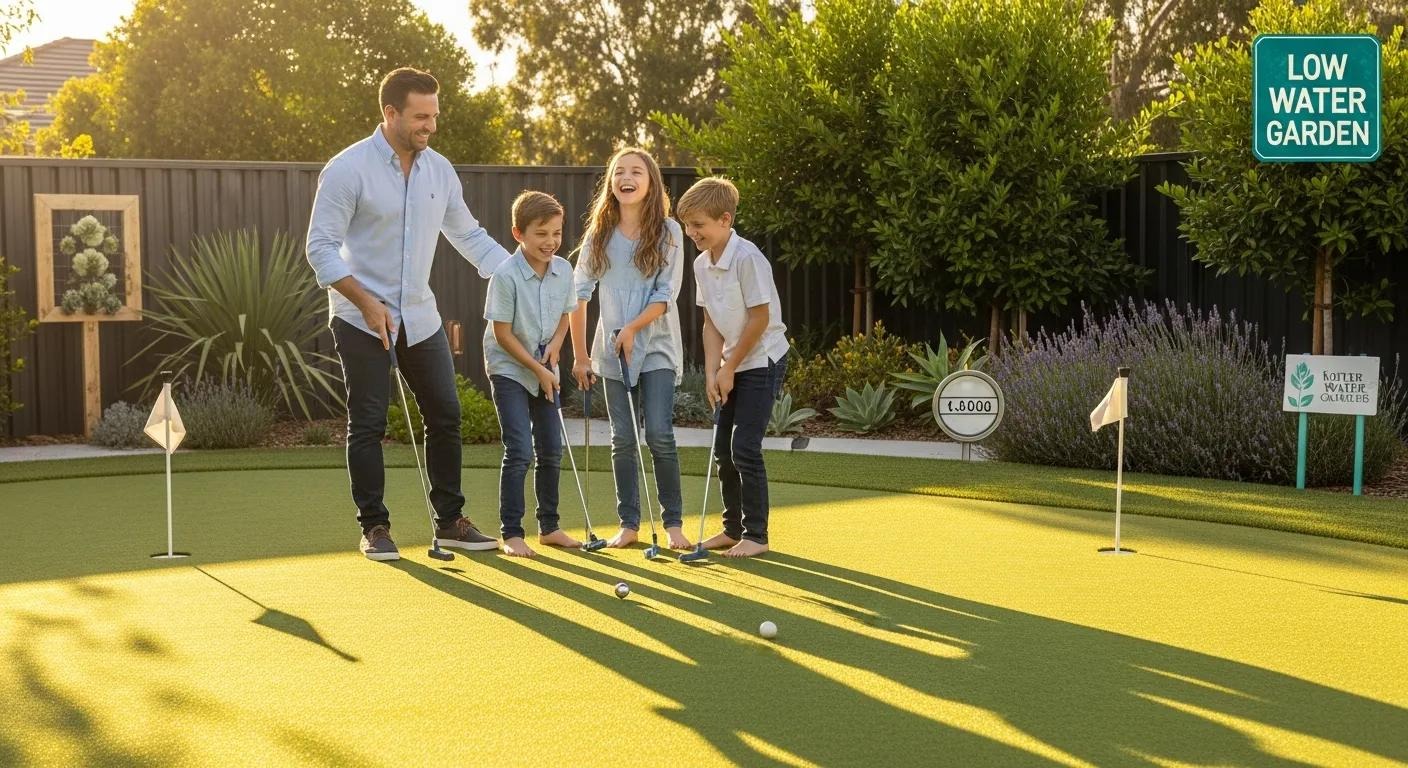
Long-term cost analysis indicates synthetic putting greens can be more economical. Although initial installation costs are often higher, savings on water and routine maintenance can offset those expenditures. High-quality synthetic turf can provide a service life of 15 to 25 years with proper care, making it a durable capital investment.
Natural grass requires recurring inputs—irrigation, fertilization, and pest control—that accumulate over time. Homeowners should factor these ongoing expenses into lifecycle cost assessments. Consequently, while natural grass may appear less costly initially, synthetic turf often yields a lower total cost of ownership over time.
When preparing a lifecycle estimate, include both predictable and occasional costs: initial materials and labor, routine maintenance (mowing, fertilizer, irrigation), periodic repairs or patching, eventual resurfacing, and disposal. Accounting for labor time and opportunity cost clarifies the financial comparison between properties.
Overall Maintenance Considerations:
Maintenance demands differ substantially between the two options. Synthetic turf requires minimal upkeep, typically limited to periodic cleaning and brushing to preserve surface performance and appearance. This lower maintenance profile appeals to homeowners with limited time or resources.
Conversely, natural grass requires regular mowing, watering, and fertilizing. These activities are labor‑intensive and time‑consuming in the desert heat. Homeowners must weigh the labor and time commitments of natural grass against the convenience of synthetic solutions; for many, synthetic putting greens provide a practical, low‑effort alternative.
A recommended maintenance approach for synthetic greens includes routine debris removal, brushing to maintain fiber uprightness, occasional rinsing after dusty periods, and inspection of seams and edging. For natural grass in arid settings, maintenance typically involves coordinated irrigation scheduling, seasonal fertilization, aeration, and pest monitoring—all of which increase labor and material inputs.
What Are the Key Features and Benefits of Synthetic Putting Greens in Hot Desert Climates?
Synthetic putting greens combine water savings, reduced maintenance, and long-term cost advantages. These features make them particularly well-suited to hot, arid climates when matched to site requirements.
Water Conservation:
A principal benefit of synthetic putting greens is the elimination of routine irrigation. In desert regions where water is scarce, this characteristic permits a consistently green surface without the heavy water demands associated with natural turf.
Beyond the direct irrigation savings, synthetic greens enable property owners to create drought-tolerant plantings in adjacent areas and to redesign irrigation zones, contributing to a cohesive, water-efficient landscape strategy that balances playability and biodiversity.
Maintenance Requirements:
Maintenance for synthetic turf is substantially lower than for natural grass. Owners avoid mowing, routine fertilization, and routine pest control, reducing both time and operating expenses. This makes synthetic greens suitable for clients seeking efficient, low‑maintenance landscapes.
Cost Efficiency:
From a cost perspective, synthetic putting greens deliver long‑term savings on both water and maintenance. While installation expenditures may be higher up front, the durability and service life of quality turf support favorable lifecycle economics. Homeowners benefit from a consistently attractive surface with lower recurring costs.
Additional Benefits of Synthetic Greens:
Beyond water and cost advantages, synthetic putting greens are engineered for durability in harsh desert conditions, including exposure to extreme heat and UV. They can also be customized to client preferences, delivering tailored landscaping solutions that meet specific performance and aesthetic goals.
Customization options commonly include pile height and density, grain direction, green speed tuning via infill selection, and contouring integration to replicate desired play characteristics. Thoughtful detailing—such as fringe areas and transition zones—provides a more natural look and functional edge between turf and planted areas.
How Does Synthetic Turf Enhance Water Conservation in Arizona Landscapes?
In Arizona landscapes, eliminating irrigation through synthetic turf substantially reduces household water consumption. Homeowners can expect water‑bill reductions of 50% to 80% after conversion, a change that supports both individual savings and broader regional conservation efforts.
When planning a conversion, coordinate with local water authorities and landscape professionals to maximize reclaimed irrigation capacity and to design planting zones that require minimal supplemental water. This integrated approach increases the practical benefits of conversion beyond the putting area itself.
What Makes Synthetic Putting Greens Durable and Heat Resistant?
Durability and heat resistance derive from advanced material selection. High‑quality synthetic turf incorporates UV‑resistant fibers and, where specified, cooling technologies that help manage surface temperature and preserve appearance and playability under extreme conditions.
When comparing options, surface temperature and initial cost should be included in a comprehensive assessment alongside water and maintenance metrics.
Artificial Turf vs. Natural Grass: Cost & Temperature
The study recognizes multiple benefits to artificial turf; however, it also reports that natural grass can exhibit lower surface temperatures and different overall cost profiles. The analysis highlights higher surface temperatures on some artificial surfaces and identifies related considerations for site selection and use.
Artificial Turf Versus Natural Grass: A Case Study of Environmental Effects, Health Risks, Safety, and Cost, 2025
Practical options to manage surface heat include selecting fibers and infill with cooling treatments, maximizing shade through structures or plantings, and specifying lighter-coloured yarns where appropriate. Manufacturers and installers can advise on combinations that reduce peak temperatures while maintaining playability.
What Are the Maintenance Requirements and Challenges of Natural Grass in Desert Areas?
Maintaining natural grass in desert areas presents notable challenges due to high water demand and labor‑intensive upkeep. Homeowners must allocate time and resources to frequent watering, mowing, and fertilizing to sustain turf health. These demands intensify during hot summer months and when water restrictions are in force.
Research corroborates that maintaining natural grass in arid environments places significant demands on water and labor resources.
Natural Grass in Deserts: Irrigation & Maintenance Costs
Many desert grasses can nevertheless require substantial irrigation and labor for maintenance.
Grasses in arid and semi-arid lands: The multi-benefits of the indigenous grasses, 2018
Managers of natural turf in desert settings often rely on a combination of improved irrigation scheduling, selection of drought-tolerant cultivars, and soil improvements (organic matter, mulching) to reduce overall demand. These techniques can help, but they do not eliminate the intrinsic water requirements of a living lawn.
How Does Natural Grass Survive Arizona Summers and Water Restrictions?
Natural grass survives Arizona summers through targeted irrigation practices and selection of heat‑tolerant varieties. Techniques such as deep watering and mulching help retain soil moisture, but they can still lead to higher water consumption, undermining long‑term sustainability.
What Are the Typical Upkeep Costs and Efforts for Desert Natural Grass?
Upkeep costs for natural grass in desert areas can be substantial. Water use, fertilizers, pest control, and ongoing labor create recurring expenses that accumulate over time, making natural grass a less attractive option for those seeking low‑maintenance landscapes.
How Do Synthetic Putting Greens and Natural Grass Compare in Installation Costs and ROI?
Installation cost and return on investment depend on multiple factors. While synthetic turf generally requires higher upfront capital, long‑term savings on water and maintenance often yield a favorable ROI. Homeowners should evaluate their landscaping objectives and budget to determine the most appropriate solution.
A helpful way to compare options is to develop a simple ROI model that lists initial investment, expected annual operating costs for each option, anticipated maintenance labor, and likely replacement cycles. Running the model with conservative assumptions clarifies when the synthetic option becomes cost-favorable for a given property.
What Are the Initial and Long-Term Cost Factors for Synthetic Turf?
Initial cost factors include materials, labor, and site preparation. Over the long term, reduced water use and lower maintenance requirements typically offset upfront expenditures, making synthetic turf a financially defensible investment for many properties.
Long-term cost items to plan for include occasional repairs, infill replenishment or topping where applicable, seam maintenance, and eventual replacement if the surface reaches the end of its service life. Warranty terms and expected service life from the manufacturer are important inputs when budgeting.
How Does Natural Grass Maintenance Impact Overall Landscaping Expenses?
Natural grass maintenance contributes materially to overall landscaping expenses. Ongoing costs for irrigation, fertilizers, pest control, and labor should be included in any comprehensive budget or lifecycle analysis.
What Environmental Impacts and Sustainability Considerations Affect Turf Choices in Desert Landscaping?
Environmental and sustainability factors are central to turf selection in desert landscaping. Synthetic turf reduces demand on local water resources and removes the need for routine chemical treatments. By contrast, the inputs required for natural grass can contribute to environmental degradation; these trade‑offs should inform decision-making.
How Does Synthetic Turf Contribute to Eco-Friendly Desert Landscaping?
Synthetic turf supports eco‑friendly desert landscaping by lowering water consumption and eliminating routine chemical applications. This approach benefits individual households and advances broader regional sustainability objectives in water‑scarce areas.
What Are the Environmental Drawbacks of Maintaining Natural Grass in Arid Climates?
Maintaining natural grass in arid climates entails high water use and the application of fertilizers and pesticides, practices that can accelerate water depletion and contribute to soil degradation. These environmental drawbacks reduce the sustainability of natural turf in desert regions.
What Is the Installation Process and Material Selection for Synthetic Putting Greens in Desert Climates?
Installation involves site preparation, careful material selection, and professional installation. Choosing high‑quality materials engineered for durability and heat resistance is essential to ensure optimal performance. Engaging experienced installers enhances longevity and functional outcomes.
Typical installation steps include detailed surveying and grading, building a stable, permeable base, installing drainage where necessary, laying geotextile as appropriate, precise turf placement and secure seam joining, application of infill if specified, and final grooming and compaction to achieve the intended playing characteristics.
- Site survey and permits
- Excavation and base construction
- Drainage and grading
- Geotextile and turf installation
- Seaming, infill, and finishing
- Final inspection and client orientation
Which Materials Ensure Optimal Performance and Longevity in Hot Conditions?
Select materials with UV‑resistant fibers and consider advanced cooling technologies to manage surface temperature. These attributes support long‑term performance and preserve the turf’s appearance under prolonged heat exposure.
Examine backing systems, stitch density, and yarn composition when comparing products. These construction details affect drainage, resilience under foot traffic, and resistance to flattening. Requesting technical data from manufacturers helps align material choice with expected use and climate exposure.
How Does Professional Installation Affect Turf Durability and Client Satisfaction?
Professional installation ensures correct base preparation, accurate grading, and proper anchoring, reducing the risk of uneven surfaces or premature wear. Investing in professional services generally improves durability and client satisfaction.
When vetting installers, request multiple references, examples of recent local projects, detailed warranties, and a written maintenance plan. Clarify who is responsible for future repairs, what the warranty covers, and how to schedule preventive maintenance to protect the investment.
What Do Local Arizona Case Studies Reveal About Synthetic Turf and Natural Grass Performance?
Local Arizona case studies document measurable water savings associated with synthetic turf and highlight the operational challenges owners face with natural grass. These real‑world examples assist prospective buyers in making informed, site‑specific decisions.
Case studies typically report measured outcomes such as reduced irrigation runtime, lower maintenance hours, and anecdotal homeowner satisfaction. Reviewing before-and-after scenarios, including photographs and utility bills where available, helps set realistic expectations for similar projects.
How Have Clients Achieved Water Savings with Synthetic Putting Greens?
Clients who have converted to synthetic putting greens commonly report water‑bill reductions in the range of 50% to 80%. Those savings support household budgets and contribute to community water‑conservation efforts.
Many clients pair synthetic greens with other water-saving measures—drip irrigation for planted areas, mulched beds, and native species—to create a comprehensive, low-water landscape that preserves useful plantings while maximizing conservation gains.
What Lessons Do Natural Grass Projects Offer for Desert Landscaping?
Natural grass projects in desert climates offer practical lessons: choose heat‑tolerant species, implement efficient watering schedules, and monitor inputs closely. These insights can improve outcomes and encourage more sustainable practices.
Continuous monitoring of soil moisture, regular system audits, and adaptive scheduling based on seasonal demand can reduce water waste. Even with these practices, many owners find that synthetic solutions better align with low-water goals and limited maintenance capacity.
What Are Common Questions About Synthetic Turf and Natural Grass in Desert Climates?
Common questions typically concern water use, maintenance obligations, and lifecycle costs. Prospective buyers should evaluate these factors in light of their property goals and operational constraints.
How Long Does Synthetic Turf Last Under Arizona Heat?
Synthetic turf typically provides 15 to 25 years of service under Arizona conditions when maintained according to manufacturer recommendations. Material quality and installation practices directly influence longevity.
Planning for eventual replacement is part of responsible lifecycle budgeting. Establish a maintenance routine that includes inspection, gentle cleaning, infill topping (if applicable), and prompt repair of localized damage to extend the usable life.
Is Synthetic Turf More Cost-Effective Than Natural Grass Over Time?
Yes. Over time, synthetic turf is frequently more cost‑effective than natural grass. Higher initial installation costs are often offset by ongoing savings on water and maintenance, resulting in lower total ownership costs.
The cost-effectiveness calculation varies with local water prices, expected use intensity, and homeowner tolerance for maintenance. A site-specific analysis that includes these local variables yields the most relevant comparison for decision-making.
For a consultation and to explore options, consider contacting Sunburst Landscaping.
To get started with your project, you can request a quote from Sunburst Landscaping.
Frequently Asked Questions
What are the environmental benefits of choosing synthetic turf over natural grass?
Synthetic turf reduces potable water consumption and removes the need for routine chemical fertilizers and pesticides. Those changes lower the environmental footprint of a landscape and help preserve local resources in water‑scarce regions.
In addition, reducing irrigation can lower runoff and nutrient loading in local drainage systems when installations are paired with appropriate permeable surfaces and planting strategies.
How does the installation process for synthetic putting greens differ from natural grass?
Synthetic putting-green installation requires precise site preparation, a stable base, and engineered drainage to ensure longevity and performance. Natural grass installation focuses on soil preparation and seeding or sod placement and typically demands ongoing maintenance. Understanding these distinctions helps owners plan budgets and maintenance regimes.
Installation of synthetic turf is more construction‑oriented and benefits from contractor experience; natural grass installation is more horticultural and requires follow-up care, such as watering and fertilization, to establish a healthy stand.
What are the potential drawbacks of synthetic turf in desert climates?
Potential drawbacks include elevated surface temperatures under direct sunlight and a higher initial installation cost than some natural alternatives. Homeowners should weigh these factors against long‑term water and maintenance savings when selecting a solution.
Other considerations include reduced habitat for some small species where turf replaces vegetated areas and the need to manage surface cleanliness in dusty environments. Designing habitat-friendly planting pockets can help maintain biodiversity.
Can synthetic putting greens be customized for different playing experiences?
Yes. Synthetic putting greens can be specified with different pile types, textures, and colors, and can incorporate undulations, slopes, and fringe areas to replicate desired playing characteristics. Customization enables a tailored experience for practice and play.
What maintenance practices are recommended for synthetic putting greens?
Recommended maintenance includes regular brushing to keep fibers upright, occasional rinsing to remove debris, inspection for wear or damage, and verification of adequate drainage to prevent pooling. Adhering to these practices extends lifespan and preserves playability.
Practical tips include promptly removing leaf litter, using a leaf blower or a soft-bristled broom for surface cleaning, and following the manufacturer’s guidance for any specific infill or sanitization products recommended for dusty climates.
How do local regulations affect the choice between synthetic turf and natural grass?
Local regulations—particularly in water‑scarce jurisdictions—can influence turf selection. Many municipalities enforce water‑conservation measures that affect the use of natural grass. Homeowners should review local codes and guidelines to ensure compliance.
Some jurisdictions offer incentives or rebates for water-efficient landscaping that can affect the financial calculus; others have rules about surface materials and stormwater management that installers must follow.
What are the long-term impacts of synthetic turf on local wildlife?
Long‑term impacts vary by site. Synthetic turf eliminates routine chemical treatments that can harm wildlife, but it may reduce habitat for some species. Combining synthetic turf with native plantings and habitat features can balance landscape goals with ecosystem support.
Intentional landscape design that includes planting islands, pollinator-friendly shrubs, and shade trees can preserve or enhance local wildlife value while maintaining low-water turf areas for recreation and play.
Conclusion
Choosing synthetic putting greens over natural grass in desert climates can deliver substantial water savings and reduced maintenance costs while supporting sustainable landscaping practices. This option often lowers total ownership costs and provides a reliable, low‑maintenance surface suited to arid conditions. For personalized assistance and to explore available options, consider contacting our team today.