
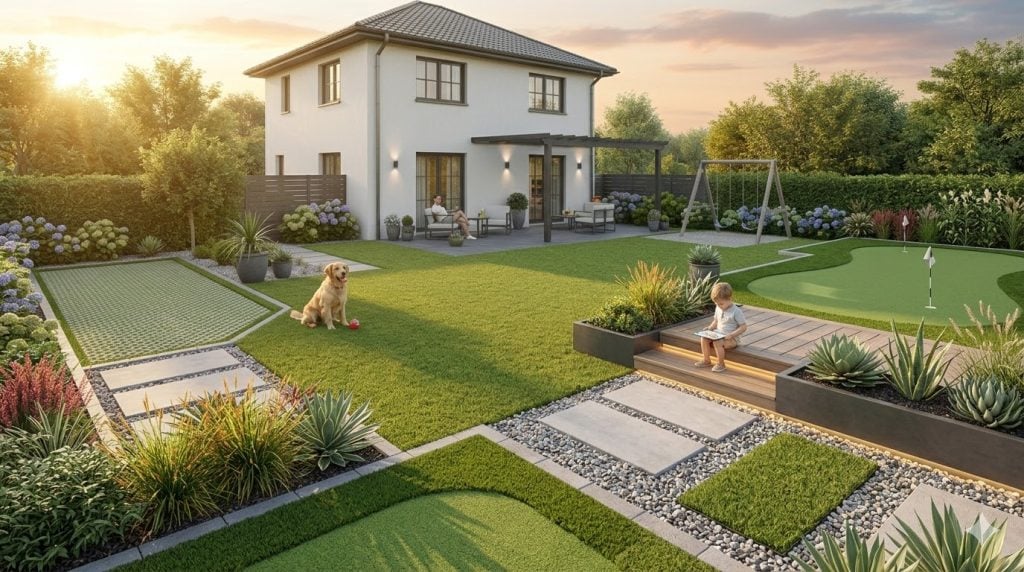
Transforming your outdoor space with residential artificial grass can significantly enhance the aesthetics and functionality of your lawn. This guide explores design ideas and the benefits of synthetic turf, offering insights into how to create a beautiful, low-maintenance outdoor environment. Homeowners often seek solutions that not only look great but also require minimal upkeep, and artificial grass offers a perfect blend of both. In this article, we will delve into the advantages of installing synthetic turf, the best types available, modern design ideas, installation methods, maintenance tips, and the cost-effectiveness of artificial grass. By the end, you will have a comprehensive understanding of how to elevate your outdoor space with artificial grass.
What Are the Benefits of Installing Residential Synthetic Turf?
Installing residential synthetic turf offers numerous advantages that cater to both aesthetic and practical needs. Synthetic grass is designed to withstand various weather conditions, providing a durable and visually appealing lawn year-round. One of the primary benefits is its low maintenance requirement, which saves homeowners time and money on lawn care. Additionally, artificial grass contributes to environmental sustainability by reducing water usage and eliminating the need for harmful pesticides and fertilizers.
How Does Artificial Grass Improve Backyard Aesthetics and Durabili
Artificial grass enhances backyard aesthetics with a lush, green appearance that remains consistent year-round. Unlike natural grass, which can become patchy or brown during dry spells, synthetic turf maintains its vibrant color and texture regardless of weather conditions. Furthermore, the durability of artificial grass means it can withstand heavy foot traffic, making it ideal for families with children and pets. This resilience ensures that your outdoor space remains beautiful and functional for years to come.
Why ChooseEco-Friendly Synthetic Grass for Sustainable Lawn Design?
Choosing eco-friendly synthetic grass is a step towards sustainable lawn design. Many modern artificial turfs are made from recycled materials and are designed to conserve water, making them an environmentally responsible choice. By opting for eco-friendly options, homeowners can significantly reduce their water consumption, which is particularly beneficial in drought-prone areas. Additionally, these products often have a longer lifespan than traditional grass, further minimizing environmental impact.
Which Are the Best Artificial Grass Types for Backyard Landscaping?
When selecting artificial grass for backyard landscaping, it’s essential to consider the various types available, each with unique features and benefits. The best options typically include those designed for specific uses, such as pet-friendly varieties or those that mimic the look of natural grass.
What Features Define Pet-Friendly and Low-Maintenance Artificial Turf?
Pet-friendly artificial turf is designed with durability and safety in mind. These types of turf often feature a robust backing material that can withstand pet wear and tear, while also being easy to clean. Additionally, many pet-friendly options include drainage systems that allow for quick drying and odor control, ensuring a clean and pleasant environment for both pets and their owners.
How Do Different Synthetic Grass Materials Compare in Quality and Cost?
The quality and cost of synthetic grass can vary significantly based on the materials used. Generally, higher-quality artificial grass is made from advanced synthetic fibers that closely resemble natural grass in appearance and feel. While these premium options may come at a higher price point, they often provide better durability and a more realistic look. Homeowners should weigh the initial investment against the long-term benefits, including reduced maintenance costs and longevity.
How to Design Modern Lawn Ideas Using Synthetic Turf?
Designing modern lawn ideas with synthetic turf enables creativity and innovation in outdoor spaces. Homeowners can incorporate various landscaping styles that complement their home’s architecture and personal taste.
What Are Popular Backyard Landscaping Styles with Artificial Grass?
Several popular landscaping styles can incorporate artificial grass effectively. For instance, contemporary designs often feature clean lines and geometric shapes, where synthetic turf can be used to create defined areas or pathways. Traditional styles may blend artificial grass with natural elements, such as flower beds or stone features, to create a harmonious outdoor environment. Each style offers unique benefits, allowing homeowners to express their individuality while enjoying the advantages of synthetic turf.
How Can Hybrid Landscaping Combine Synthetic Turf with Natural Elements?
Hybrid landscaping combines synthetic turf with natural elements to create a balanced and visually appealing outdoor space. This approach allows homeowners to enjoy the low maintenance of artificial grass while still incorporating live plants and natural features. For example, using artificial grass around a natural stone patio or integrating it with flower beds can enhance the overall aesthetic while providing functional areas for relaxation and entertainment.
What Are the Step-by-Step Residential Synthetic Turf Installation Methods?
Installing synthetic turf involves several key steps to ensure a successful and long-lasting result. Proper preparation and installation techniques are crucial for achieving the best outcome.
How to Prepare Your Backyard for Artificial Grass Installation?
Preparing your backyard for artificial grass installation requires careful planning and execution. First, homeowners should clear the area of any existing grass, weeds, or debris. Next, it’s essential to level the ground to create a smooth surface for the turf. This may involve adding a base layer of crushed stone or sand to ensure proper drainage and stability. Finally, compacting the base material will provide a solid foundation for the artificial grass.
What Are the Key Installation Techniques for Long-Lasting Synthetic Lawns?
Key installation techniques for synthetic lawns include precise cutting and seaming of the turf to ensure a seamless appearance. Additionally, using high-quality adhesive and securing the edges properly will prevent lifting or curling over time. It’s also important to infill the turf with materials such as sand or rubber to enhance stability and provide cushioning. Following these techniques will result in a durable and visually appealing lawn.
How to Maintain Your Artificial Grass Lawn for Longevity and Appearance?
Maintaining an artificial grass lawn is relatively straightforward, requiring minimal effort compared to natural grass. Regular maintenance ensures that the turf remains in excellent condition and continues to enhance the beauty of your outdoor space.
What Are Low-Maintenance Lawn Alternatives and Care Tips?
Low-Maintenance lawn alternatives include regular brushing to keep the fibers upright and prevent matting. Homeowners should also periodically rinse the turf to remove dust and debris, ensuring a clean and fresh appearance. Additionally, using a leaf blower can help clear fallen leaves and other organic matter. These simple care tips will help maintain the aesthetic appeal of your artificial grass lawn.
How to Clean and PreserveEco-Friendly Synthetic Grass Effectively?
Cleaning eco-friendly synthetic grass involves using non-toxic cleaning solutions to remove stains and odors. Homeowners can use a mixture of water and mild soap to spot-clean spills or messes. For deeper cleaning, a power washer can be used, but it’s essential to follow the manufacturer’s guidelines to avoid damaging the turf. Regular maintenance and cleaning will preserve the integrity and appearance of eco-friendly synthetic grass.
What Is the Cost and ROI of Installing Artificial Grass in Residential Spaces?
Understanding the cost and return on investment (ROI) of installing artificial grass is crucial for homeowners considering this option. While the initial investment may be higher than traditional grass, the long-term savings can be significant.
How Does Synthetic Turf Installation Compare to Natural Lawn Expenses?
The installation of synthetic turf typically involves a higher upfront cost compared to natural grass. However, when considering the ongoing expenses associated with natural lawns—such as water, fertilizers, and maintenance—synthetic turf can offer substantial savings over time. Homeowners can expect to see a return on their investment through reduced water bills and lower maintenance costs.
The installation cost of artificial turf fields is quite high, whereas replacing residential lawns with artificial turf is quite low.
Artificial Turf for Residential Lawns & Installation Costs
The installation cost of artificial turf fields is quite high, whereas replacing residential lawns with artificial turf is quite low.
Environmental and health impacts of artificial turf: a review, H Cheng, 2014
Despite the upfront costs, many sources highlight the substantial long-term benefits and cost-effectiveness of artificial turf.
Artificial Turf: Long-Term Benefits & Cost-Effectiveness
Investing in modern artificial turf due to its associated long-term benefits and decreased costs. The validity of cost-effectiveness data and some injury studie shas been impacted by
Playing surface and injury risk: Artificial turf vs. natural grass, 2022
What Are the Long-Term Savings and Environmental Benefits?
Long-term savings from installing artificial grass include reduced water usage and a lower need for chemical treatments.Additionally, synthetic turf contributes to environmental sustainability by reducing the carbon footprint of lawn maintenance.Homeowners can enjoy a beautiful lawn while also making a positive environmental impact making artificial grass a smart choice for modern landscaping.
Get your free estimate today and transform your lawn effortlessly!Discover how artificial grass can save you time, money, and resources – start now!