
By Marketing Team, Sunburst Landscaping
Although do‑it‑yourself hardscaping may appear cost‑effective for Peoria homeowners, projects commonly fail to meet expectations due to technical and climatic challenges. This article identifies common DIY mistakes, explains the advantages of hiring professional contractors, and describes how local expertise yields longer‑lasting results in Arizona’s conditions. Readers will gain practical guidance on common errors, the benefits of professional installation, and maintenance practices tailored to the regional climate to avoid costly repairs and protect property value.
What Are the Common DIY Hardscaping Mistakes in Peoria, AZ?
Homeowners undertaking DIY hardscaping often make errors that reduce project durability and increase overall cost. Typical issues include insufficient site preparation, incorrect material selection for the climate, and inadequate drainage planning. Recognizing these common pitfalls helps homeowners decide when to engage professional support or adjust project plans to improve outcomes.
Common DIY mistakes often stem from underestimating subsurface work: inadequate compaction of base materials, failing to install aggregate to the correct depth beneath pavers, or omitting edge restraints that keep features stable over time. These omissions may not be obvious immediately, but manifest as settlement, shifting joints, or uneven surfaces within months or a few seasons, increasing repair costs and diminishing the finished appearance.
How Does Arizona’s Climate Impact DIY Hardscaping Success?
Arizona’s extreme heat and aridity materially affect hardscape performance. High temperatures and strong UV exposure accelerate material degradation, while local soil characteristics influence settlement and stability. Without accounting for these conditions—through appropriate material choice and drainage design—hardscapes are prone to cracking, fading, and erosion.
Research further underscores the need for considered hardscape design to mitigate heat and enhance outdoor thermal comfort in hot, arid environments.
Hardscape Design for Hot Arid Climates
Effective landscape design that optimizes solar irradiation and absorbed heat can reduce mean radiant temperature (MRT) and improve outdoor thermal comfort, particularly as vegetated areas decline. Using a case study of Cairo, Egypt, the research demonstrates how variations in layout and surface materials influence reflected solar energy and the urban thermal climate. It introduces an approach that integrates generative design and parametric modeling to optimize urban park microclimates and provides a structured methodology for sustainable, climate‑resilient outdoor spaces.
… landscape design parameters with high reflective hardscapes: guidelines for optimizing human thermal comfort in outdoor spaces by design-a case on hot arid climate …, RA Abdelwahab, 2025
In practice, climate impacts include accelerated UV fading of pigments, expansion and contraction of materials that can loosen joints, and faster deterioration of certain binders or jointing sands under intense sun. Designers counter these effects by specifying heat‑tolerant pavers, light‑reflective finishes where appropriate, and jointing materials rated for sustained UV exposure. Considering orientation, shading, and adjacent landscape elements in the initial design helps to reduce peak surface temperatures and prolong material life.
What Structural Failures and Costly Errors Do DIY Projects Often Encounter?
Structural failures in DIY hardscaping most often originate from poor drainage, unsuitable material selection, and failure to identify underground utilities. Water pooling and erosion compromise foundations, improper materials are susceptible to thermal stress, and accidental utility damage incurs significant repair costs. Anticipating these risks through planning or professional consultation reduces the likelihood of costly remediation.
Other frequent errors include failing to verify subgrade conditions before construction, which increases the risk of unexpected settlement in uneven soils or those with soft spots. Additionally, projects that alter grades without properly directing surface runoff can cause water to collect against foundations or wash away base materials. Taking time for a thorough site assessment, even when working on a DIY budget, will highlight when specialist input is prudent.
What Are the Benefits of Hiring Professional Hardscaping Contractors in Peoria, AZ?
Engaging licensed hardscaping contractors improves project quality, safety, and longevity. Professionals apply technical design standards, correct site preparation, and construction best practices to deliver aesthetically coherent and structurally sound installations. They also have access to materials specified for Arizona conditions, which reduce maintenance requirements, extend service life, and enable efficient work.
Beyond on‑site quality, contractors manage project logistics that are often overlooked in DIY projects: coordinated material delivery, secure on-site storage to prevent damage from sunlight and heat, staged work to avoid destabilizing excavations, and the use of purpose‑built equipment for precise compaction and grading. These practical capabilities both speed up completion and reduce the risk of repair-related costs later.
How Does Local Expertise Improve Hardscape Design and Installation?
Local expertise delivers solutions calibrated to Peoria’s soils, microclimates, and regulatory requirements. Contractors with regional experience select appropriate materials, design effective drainage systems, and ensure compliance with local codes and permit processes. This knowledge reduces risk, improves performance, and supports predictable project timelines.
In practice, local contractors are familiar with permitting thresholds, typical inspection processes, and common neighborhood constraints, such as Homeowners Association guidelines. They can anticipate site constraints that affect equipment access, advise on staging to minimize disruption, and propose durable material combinations proven in nearby projects—helping the homeowner avoid costly redesigns or rework.
What Measurable Outcomes Demonstrate the Value of Professional Services?
Professional hardscaping yields measurable benefits: enhanced property value through improved curb appeal; lower long‑term maintenance costs due to proper material selection and installation; and increased usability and aesthetic quality of outdoor living areas. These outcomes represent tangible returns on the initial investment for homeowners.
Additional measurable outcomes include documented warranties or service agreements, predictable maintenance schedules, and the ability to quantify lifecycle expectations for materials and finishes. When a contractor provides a clear maintenance plan and warranty terms, homeowners can better compare the total cost of ownership between DIY attempts and professionally completed installations.
Which Hardscape Design Ideas Are Best Suited for Peoria Backyards?
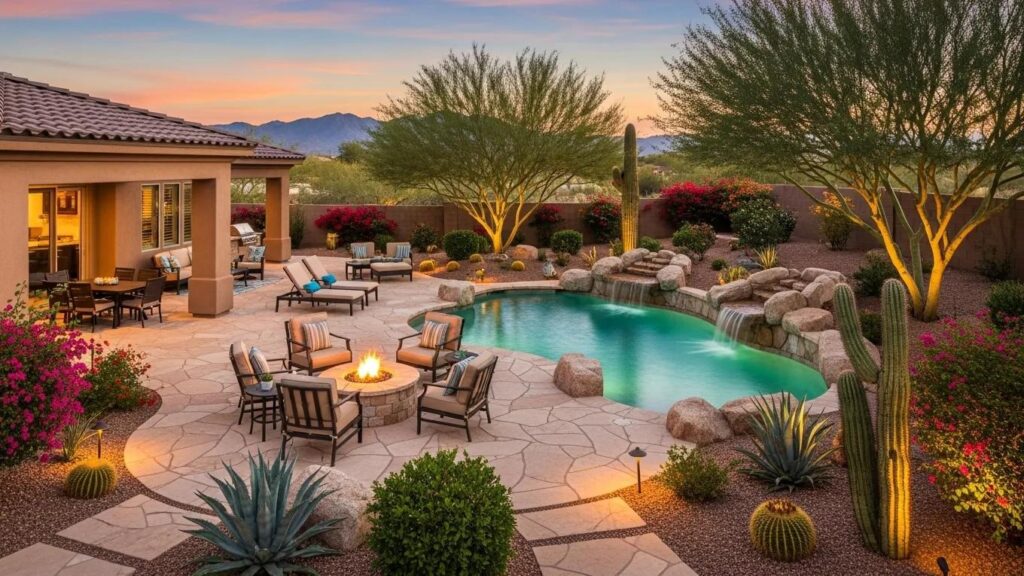
Designs for Peoria backyards should prioritize durability and functionality. Features such as patios, retaining walls, and pathways provide practical outdoor living areas that withstand local conditions. Integrating xeriscaping principles reduces water consumption and supports sustainable landscape performance in an arid environment.
Consider layering functionality: a durable paved patio for primary entertaining; permeable pathways connecting activity zones to aid drainage; and strategically placed retaining walls to create usable terraces on sloped lots. Shade structures, properly chosen plantings, and mosaics of permeable and non‑permeable surfaces can all enhance comfort without compromising durability.
How Can Backyard Patios and Retaining Walls Enhance Property Value?
Patios add usable square footage for entertainment and relaxation, while retaining walls prevent erosion and create structured, visually appealing terrain. Both features enhance site functionality and curb appeal, improving the property’s marketability to prospective buyers.
Retaining walls also enable the creation of tiered planting beds, private seating nooks, and integrated lighting or low seating, which together increase the yard’s functionality beyond a simple flat surface. Thoughtfully designed patios and walls that tie into landscaping and outdoor lighting deliver a cohesive look that potential buyers value.
What Are the Best Hardscaping Materials for the Peoria, AZ Climate?
Material selection is central to long‑term performance in Peoria. Preferred options are durable, heat‑resistant, and low‑maintenance. Natural stone, concrete pavers, and brick are commonly chosen for their combination of aesthetic quality and longevity under Arizona conditions.
When choosing materials, consider surface texture (for slip resistance in wet conditions), color (lighter tones reduce heat absorption), and the compatibility of jointing and base systems with site drainage. For example, permeable pavers can reduce runoff and allow some infiltration, while fully sealed concrete surfaces may shed water quickly but concentrate runoff into drainage systems that must be properly sized.
How Do Durability and Cost Compare Among Popular Materials?
When comparing popular hardscaping materials, durability and cost are two critical factors to consider.
| Material | Durability | Cost Range |
|---|---|---|
| Natural Stone | High | $ |
| Concrete Pavers | Medium | $$ |
| Brick | High | $$$ |
Natural stone delivers superior durability and visual appeal, justifying its higher cost in many installations. Concrete pavers represent a cost‑effective compromise between price and performance, while brick offers a classic aesthetic with reliable longevity.
Beyond material costs, installation complexity influences total project cost: extensive grading, greater excavation depth, engineered fill, or the need for retaining structures will increase labor and equipment charges. Lighting, irrigation modifications, and accessory elements such as integrated steps or custom drainage channels should also be considered when evaluating material choices.
Why Is Material Choice Critical for Long-Term Hardscape Performance?
Material choice determines resilience to heat, UV exposure, and moisture extremes. Selecting materials engineered for arid conditions reduces cracking and fading, lowers maintenance demands, and preserves the landscape’s appearance. Prioritize quality and climate suitability to ensure lasting performance.
Selecting complementary materials (for example, a permeable walking surface adjacent to a solid entertaining pad) helps balance aesthetics with hydrology and long‑term function. Properly matching base systems and joint materials to the chosen surface is essential to avoid premature failure caused by incompatible assembly methods rather than the surface material itself.
How Can Proper Maintenance Extend the Life of Hardscape in Peoria, AZ?
Routine maintenance preserves function and appearance. Scheduled inspections, timely repairs, surface cleaning, and appropriate sealing protect hardscapes from environmental stress and prevent minor issues from becoming major failures.
What Are Essential Hardscape Maintenance Tips for Arizona Properties?
Follow these essential maintenance practices:
- Regular Inspections: Check for cracks, erosion, and other signs of wear.
- Timely Repairs: Address any issues immediately to prevent further damage.
- Seasonal Maintenance: Clean surfaces and apply sealants as needed to protect against harsh sun exposure.
Consistent application of these practices significantly extends service life and maintains the hardscape’s condition.
A practical maintenance schedule includes quarterly visual inspections, an annual deep cleaning and reapplication of sealants where recommended, and a check of joint materials and drainage paths after seasonal storms. Simple homeowner tasks—sweeping, removing debris, topping up joint sand, checking for plant intrusion—prevent more expensive interventions later.
How Does Professional Maintenance Prevent Common DIY Pitfalls?
Professional maintenance mitigates common DIY oversights by providing systematic inspections, early issue detection, and maintenance plans tailored to specific materials and site conditions. This proactive approach helps ensure optimal performance and reduces lifecycle costs.
Contracted maintenance often includes documentation of work performed and recommendations for replacement intervals, allowing homeowners to plan budgets and allocate funds for eventual refurbishments. Professionals can also provide corrective measures beyond typical DIY capabilities—such as regrading to improve drainage, replacing compromised base material, or stabilizing retaining walls—thereby extending the functional life of hardscapes.
What Is the Typical Cost of Hardscaping Services in Peoria, AZ?
Costs for hardscaping vary according to project scale, selected materials, and design complexity; understanding these variables is essential for realistic budgeting.
How Do Professional Hardscaping Costs Compare to DIY Expenses?
DIY work may lower initial outlay but can increase total cost if errors require corrective work. Professional installation requires a higher upfront investment, yet typically reduces long‑term expenditure through durable construction and fewer repairs.
Consider the full scope when comparing costs: professional bids commonly include site preparation, grading, base materials, drainage, compacting to specified densities, and finish details such as sealants or integrated lighting. A DIY approach that excludes or shortcuts any of these elements can lead to faster degradation and additional expense over the lifespan of the installation.
What Factors Influence Pricing for Backyard Patio and Retaining Wall Projects?
Several factors influence the pricing of backyard patio and retaining wall projects, including:
- Property Size: Larger areas require more materials and labor.
- Design Complexity: Intricate designs may increase labor costs.
- Material Selection: Higher-quality materials typically come with a higher price tag.
Understanding these cost drivers enables homeowners to budget effectively and make informed trade‑offs between design, materials, and scope.
Other practical cost drivers include access constraints (limited access can increase labor hours), site slope (which may require additional earthworks or engineered solutions), and the need for utility locates or protective measures. When retaining walls exceed common heights, engineered designs and permits may be required, which can increase design and permitting costs but ensure safety and compliance.
How Can Homeowners Request a Quote for Professional Hardscaping in Peoria, AZ?
Requesting a quote is a straightforward step that clarifies options, scope, and anticipated costs for a hardscaping project.
What Information Is Needed to Get an Accurate Hardscaping Estimate?
To receive an accurate estimate, homeowners should gather the following information:
- Property Type and Size: Details about the area to be landscaped.
- Design Features: Specific elements desired in the project.
- Access and Utilities: Information about existing utilities and access points.
Providing these details allows contractors to prepare precise, site‑specific estimates tailored to the homeowner’s objectives.
To accelerate accurate quoting, supply clear photos of the area from several angles, approximate dimensions, reference images of preferred finishes, and any constraints such as existing irrigation lines, slopes, or noise restrictions. If available, share recent utility marking or site surveys. This information helps contractors present realistic proposals that align with homeowner expectations.
How Does Sunburst Landscaping Ensure Client Satisfaction and Tailored Solutions?
Sunburst Landscaping, Inc. focuses on personalized service and durable materials across comprehensive landscaping and hardscaping projects. Their approach emphasizes collaboration with homeowners to develop tailored solutions that address specific site conditions and client goals, supporting quality outcomes in the Peoria area.
A typical work process includes an initial consultation, a site assessment, material and layout options, a written proposal, and a defined schedule. Homeowners should ask potential contractors for references, sample warranties, and a clear scope of work that itemizes materials, labor, and any subcontracted services to ensure transparency before work commences.
Homeowners in Peoria seeking professional assistance can contact Sunburst Landscaping for comprehensive services to transform their outdoor spaces.
To begin your hardscaping project, consider requesting a quote from experienced professionals.
Frequently Asked Questions
What are the key differences between DIY and professional hardscaping services?
DIY hardscaping typically lacks professional design, specialized materials, and adherence to regional construction practices, increasing the risk of premature failure and higher repair costs. Professional services deliver technical design, appropriate material specification, and construction standards that improve durability and reduce lifecycle expense.
How can homeowners choose the right hardscaping contractor in Peoria?
Select a contractor by reviewing local reviews, requesting references, and examining completed projects similar to your scope. Verify experience with Peoria’s climate and soil conditions, obtain multiple estimates for comparison, and assess the contractor’s communication and willingness to align with your project objectives.
Additional selection criteria include confirming licensing and insurance, asking for a detailed written proposal, clarifying warranty terms, and visiting recent job sites. Clear payment schedules, a reasonable timeline, and a transparent procedure for handling unforeseen site conditions are important indicators of a reliable contractor.
What maintenance practices are specific to hardscaping in arid climates like Arizona?
In arid climates, maintenance should prioritize debris removal, routine inspection for cracks or erosion, and protection against UV exposure via appropriate sealants. Prompt attention to minor defects prevents accelerated deterioration from heat and dryness.
What are the environmental benefits of professional hardscaping?
Professional hardscaping can lower water consumption and runoff through conscientious material selection and the application of xeriscaping principles. Properly designed hardscape also supports soil stability and can contribute to local ecological function by creating favorable microhabitats.
How can hardscaping improve outdoor living spaces?
Hardscaping defines and organizes outdoor areas, creating functional zones for relaxation and entertaining. Elements such as patios, walkways, and retaining walls enhance usability and aesthetics, increasing homeowner enjoyment and the property’s appeal to buyers.
What are the most common hardscaping features that add value to a property?
Features that commonly add value include patios, walkways, retaining walls, outdoor kitchens, and fire pits. Each improves functionality and visual appeal, contributing to a more marketable and enjoyable outdoor environment.
Conclusion
Engaging professional hardscaping services in Peoria, AZ ensures outdoor spaces that are attractive, durable, and fit for purpose. Leveraging local expertise helps homeowners avoid typical DIY errors and achieve solutions tailored to the regional climate. The long‑term advantages of quality materials and expert installation typically offset initial investment by enhancing property value and reducing maintenance obligations. Start the process by requesting a quote from our experienced team today.
Careful planning, material selection appropriate for the desert environment, and a realistic maintenance plan will preserve the function and beauty of outdoor hardscapes. Whether homeowners elect to complete small, simple tasks themselves or contract full design‑build services, understanding the technical requirements and long‑term implications of installation will lead to better outcomes and a more durable, enjoyable outdoor space.