
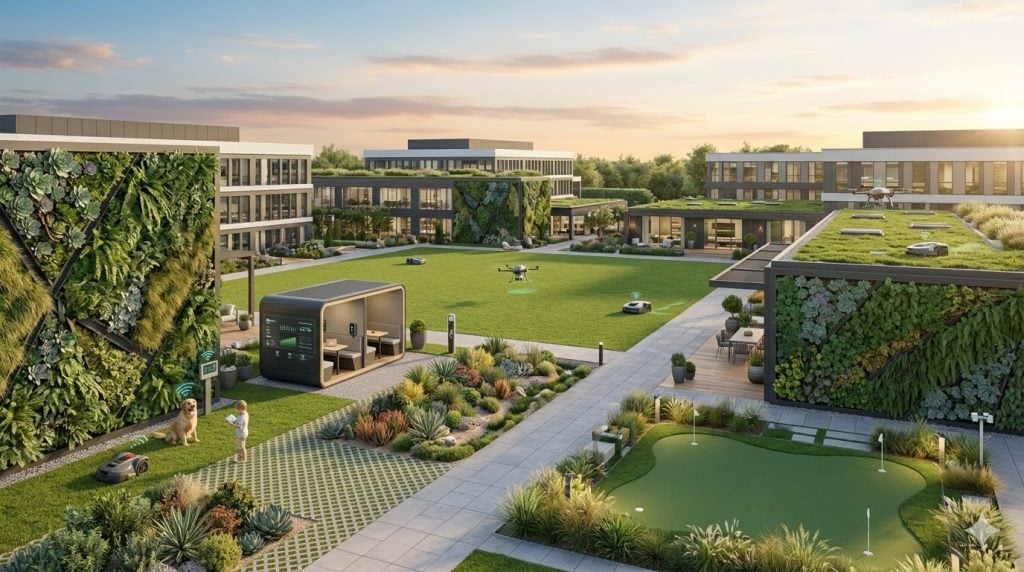
Commercial landscaping in 2026 is about doing more with less—less water, less wasteful maintenance, and more amenities that work in Arizona’s climate. This article breaks down the trends property managers, HOAs, and commercial developers need to consider: native and drought-tolerant planting, commercial artificial turf, smart irrigation, durable hardscaping, and amenity-driven outdoor design. You’ll get practical reasons these approaches cut operating costs, improve tenant and visitor experience, and deliver measurable ROI in desert conditions. We also map straightforward implementation steps, useful tech integrations, and lifecycle maintenance guidance so decision-makers can plan predictable, long-lasting projects. Finally, we explain how local crews turn these trends into action and how to request a consultation or quote for Arizona projects.
What sustainable commercial landscaping trends should Arizona sites prioritize in 2026?
For 2026, sustainable commercial landscaping focuses on cutting water use, simplifying upkeep, and building outdoor spaces that stay attractive in Arizona heat. Key moves include native and xeriscape palettes that need far less irrigation, specification-grade artificial turf for heavy-use areas, permeable paving to control runoff, and rain-capture strategies for irrigation support. Together, these tactics lower lifecycle costs, reduce regulatory exposure, and protect usable site area and tenant amenities. Below we unpack native planting benefits and the practical trade-offs of artificial turf for Arizona commercial properties.
How do native and drought-tolerant plantings help commercial properties in Arizona?
Choosing native and drought‑tolerant plants cuts irrigation needs and improves plant survival in high heat by matching species to local soils and microclimates. That reduces yearly water consumption and lowers recurring maintenance like pruning and replacements—so operating costs become more predictable. Native palettes also support local biodiversity and pollinators, which enhances curb appeal and community perception without heavy resource inputs. Property teams that shift to drought‑tolerant beds typically see fewer plant failures during heat waves and can redirect maintenance dollars toward tenant-facing amenities.
Before we compare artificial turf options, here’s a quick side‑by‑side of common sustainable solutions to help decision-making.
The table below summarizes leading sustainable solutions and their operational impacts for Arizona commercial sites.
| Sustainable Solution | Water Use | Maintenance Frequency |
|---|---|---|
| Native / Xeriscape Plants | Low | Low |
| Drought‑Tolerant Mixed Beds | Moderate–Low | Moderate |
| Permeable Paving | N/A (reduces runoff) | Low–Moderate |
| Commercial Artificial Turf | Minimal | Low |
This comparison shows that native plant systems and commercial turf deliver the clearest water reductions on arid sites. The right choice depends on use case, foot traffic, and amenity goals—so weigh function against upfront cost and lifecycle needs.
Why is commercial artificial turf a sustainable option for Arizona sites?
Artificial turf eliminates the irrigation, mowing, fertilizing, and pest control that natural lawns demand—so it can save substantial water on high‑use commercial zones. Modern commercial systems use durable pile, engineered backing, and specification‑grade infill to stand up to athletic use, pet relief areas, and busy common spaces. When paired with engineered drainage, turf preserves surface performance after storms and avoids standing water—important for safety and business continuity. In Arizona, turf often provides predictable maintenance budgets and long service life compared with repeatedly replanting natural grasses under extreme heat.
Below is a concise list of the top sustainable strategies to prioritize in 2026 commercial projects.
- Native and xeriscape planting: Lower irrigation and upkeep without sacrificing appearance.
- Commercial artificial turf: Remove irrigation needs in high‑use lawn zones.
- Permeable paving and stormwater management: Reduce runoff and help recharge soils.
- Rainwater capture and reuse: Supplement non‑potable irrigation during peak demand.
- Integrated maintenance planning: Sync watering, pruning, and inspections for efficiency.
These options form a practical roadmap for facility managers weighing water savings, amenity value, and project cost.
How is smart irrigation changing commercial landscape management in 2026?
Smart irrigation uses sensors, weather data, and adaptive scheduling to apply water only where and when landscapes need it—cutting waste and improving plant health. Soil moisture probes and ET inputs prevent overwatering while keeping landscapes resilient in an arid climate. The financial case is straightforward: measurable water savings and lower labor for manual adjustments. Smart controllers and remote monitoring are now core tech for commercial portfolios. The sections below define smart systems and outline complementary AI and lighting upgrades that boost operational efficiency.
What makes smart irrigation systems effective for businesses?
Smart irrigation combines soil sensors, forecast or cloud ET data, and programmable controllers to water dynamically instead of relying on fixed timers. Key components include soil moisture probes, weather station inputs, and zone‑capable controllers. Retrofit projects in arid climates commonly see conservative water savings in the 15–35% range. When integrated with building management and remote dashboards, these systems let teams monitor consumption, adjust schedules from anywhere, and produce compliance reports for local water authorities.
Smart systems also cut labor by automating adjustments and sending alerts for stuck valves or leaks—so landscapes stay healthier and emergency repairs drop.
Here’s a compact comparison of conventional versus smart irrigation metrics for quick reference.
| Irrigation Approach | Water Savings | Cost to Install | Typical Payback |
|---|---|---|---|
| Conventional Timers | 0–10% | Low | 5+ years |
| Weather‑Based Controllers | 15–30% | Moderate | 2–5 years |
| Full Smart (sensors + controllers) | 20–40% | Moderate–High | 1–4 years |
Higher upfront investment in smart irrigation typically returns faster payback through water and labor savings—especially on high‑use commercial landscapes.
How can automated lighting and AI improve landscape maintenance?
Automated LED lighting increases safety, extends usable hours for outdoor amenities, and trims energy costs via dimming and scheduling. AI tools add another layer: they predict irrigation needs, flag stressed plant zones from imagery or sensors, and optimize maintenance crew routes to prevent small issues from growing. Together, these systems improve tenant experience and let property teams shift from reactive fixes to preventive work. Phased AI and lighting upgrades allow managers to measure savings incrementally and scale tech across multiple sites.
As smart irrigation and automation roll out, owners gain clearer performance data to guide capital planning and capture better ROI.
What features define modern commercial outdoor living spaces in 2026?
Today’s commercial outdoor spaces focus on wellness, social activation, and flexible amenities that boost tenant satisfaction and give properties a leasing edge. Typical features include wellness gardens, shaded communal seating, outdoor café or kitchen zones, and flexible event areas that serve employees, residents, and visitors. These features create usable square footage that can raise occupancy and dwell time—translating to measurable commercial value. The sections below examine wellness gardens and outdoor kitchens, and how they drive engagement.
How do wellness gardens and communal areas support tenant and employee well‑being?
Wellness gardens and shared areas give people a place to reset, reduce stress, and move briefly during the day—factors linked to higher productivity and tenant satisfaction. Thoughtful plant choices, varied seating, and microclimate controls (shade, misters, windbreaks) create spaces people actually use for breaks, informal meetings, and casual interaction. These amenities help properties stand out and support tenant retention when paired with simple programming and sensible maintenance. Designing for accessibility and low upkeep ensures these spaces stay inviting without adding big operational burdens.
Communal amenities work particularly well alongside active installations like outdoor kitchens and event zones, which further increase on‑site engagement.
Outdoor kitchens and entertainment areas give tenants more reasons to stay on site and can create event‑driven revenue for retail or hospitality properties.
What practical role do outdoor kitchens and entertainment zones play?
Outdoor kitchens and entertainment zones activate plazas, add amenity value for multifamily and office sites, and create memorable experiences that encourage repeat visits. Practical planning matters: choose durable finishes, easy‑to‑maintain surfaces, and confirm water and electrical needs early so areas meet safety codes and keep lifecycle costs predictable. When integrated with circulation and acoustic considerations, these zones can host events or become signature spaces for tenants and customers. Good material selection and routine preventive maintenance keep long‑term repair costs down and preserve a premium look for leasing narratives.
Solid programming and management plans keep these amenities safe, functional, and aligned with property goals.
- Utility planning: Confirm electrical and plumbing needs early in design.
- Durable materials: Specify finishes that resist heavy commercial use.
- Maintenance plan: Schedule regular cleaning and inspections to protect your investment.
These practical steps help owners capture the full commercial value of outdoor entertainment installations.
Why does resilient hardscaping matter for safety and long‑term value?
Tough, well‑designed hardscapes reduce liability, stand up to heavy foot and vehicle traffic, and keep landscape appearance consistent with predictable maintenance. Resilient paving and proper drainage minimize trip hazards, stop erosion, and reduce repair frequency that can disrupt tenants. Investing in robust materials and proactive maintenance lowers total lifecycle costs and supports safety compliance. The subsections below cover material choices and maintenance practices that protect commercial hardscapes.
How does resilient paving improve site safety and curb appeal?
Resilient paving enhances safety with textured surfaces for better slip resistance and engineered load capacity for service vehicles and heavy foot traffic. Materials that reflect heat or that are used with shading reduce surface temperatures and make walking more comfortable in Arizona summers. High‑quality pavers and stone also need fewer repairs, preserving curb appeal. Freeze‑thaw performance is less of a concern in Arizona, but UV stability and colorfastness are important for long‑term appearance.
Picking the right materials up front reduces repair cycles and protects both visual and functional investment.
| Material | Durability | Maintenance Needs | Safety Benefits |
|---|---|---|---|
| Concrete Pavers | High | Moderate (joint upkeep) | Good slip resistance |
| Porous Asphalt | Moderate–High | Moderate (surface repair) | Reduces runoff; slip‑safe when textured |
| Natural Stone | Very High | Low–Moderate (sealing) | Durable, stable under load |
What are best practices for proactive hardscape maintenance?
A proactive program starts with a documented inspection schedule covering joint integrity, surface wear, drainage, and lighting to head off hazards. Regular cleaning, timely seal‑coating where appropriate, and prompt joint repairs extend service life and reduce large replacements. Track maintenance activities and forecast lifecycle costs so budgets can accommodate phased renewals instead of surprise capital calls. Seasonal checks—after monsoon storms, for example—catch erosion or drainage problems early and keep properties safe and attractive.
This disciplined approach keeps hardscapes functional and helps limit liability exposure over time.
Resilient Hardscaping and Smart Irrigation Best Practices
Practical guidance on water‑efficient landscapes, smart irrigation setups, and site resilience for commercial projects.
Contracts Risk Management for Large Landscaping Contracts Involving Construction and Maintenance, MK Varma, 2025
- Inspection checklist: Check paving evenness, joint condition, and drainage outlets.
- Routine tasks: Sweeping, pressure washing, and light repairs on a set schedule.
- Preventive treatments: Use sealants, re‑leveling, and joint sand replacement to extend life.
These steps create a maintenance culture that keeps hardscapes safe, attractive, and cost‑effective.
How does Sunburst Landscaping turn 2026 trends into Arizona commercial projects?
Sunburst Landscaping uses Arizona‑focused design‑build methods to combine drought‑wise plant palettes, commercial artificial turf, smart irrigation, and durable hardscaping for clients in Phoenix, Scottsdale, Peoria, and surrounding communities. We translate high‑level trends into site‑specific plans that prioritize water efficiency and long‑term performance. Our commercial services include turf installations, MaxxFlow drainage solutions, smart irrigation setup, and maintenance planning that meets local regulations and tenant amenity goals. If you’re evaluating trend‑driven landscaping, we recommend requesting a consultation—typical next steps are a site visit, scope review, and a written proposal.
We pair practical technology with sustainable design so property owners get measurable outcomes and predictable budgets.
What sustainable and tech solutions does Sunburst offer?
Sunburst provides commercial artificial turf systems specified for high traffic—carefully selected pile, backing, and infill to perform in desert conditions. Installations pair advanced drainage (branded locally as MaxxFlow) to handle storm events and keep athletic and recreational surfaces playable. We also install smart irrigation controllers and sensor networks to reduce outdoor water use, and we design projects that combine drought‑resistant plantings with permeable hardscape elements. These bundled solutions aim for predictable maintenance schedules and warranty‑backed outcomes for commercial owners.
Our focused service mix supports Arizona project goals while reducing operational surprises.
How can businesses request consultations and quotes for trend‑driven landscaping?
To request a consultation or quote, gather basic project details—site address, approximate landscaped area, current irrigation type, and primary objectives like water savings, amenity upgrades, or maintenance reduction. Call Sunburst Landscaping at (623) 412-2200 to speak with a project coordinator or use our online request form to start a written scope. Expect an initial response to schedule a site visit and a follow‑up proposal. Standard proposal steps include an on‑site assessment, a concept plan with phased options, and a budget estimate that outlines projected water and maintenance savings. Providing photos, utility maps, and tenant usage patterns speeds up accurate scoping and cost modeling.
This straightforward process helps owners get tailored proposals that connect 2026 trends to real project outcomes.
Xeriscape: A Guide to Water‑Wise Landscaping for Conservation and Savings
This guide introduces Xeriscape™, a water‑wise landscaping approach that can cut outdoor water use by up to 50% without sacrificing beauty. Xeriscape landscapes use fewer fertilizers and chemicals and require less maintenance—saving time, effort, and money. Any landscape, new or established, can become more water efficient by following one or more of the seven Xeriscape steps.
Xeriscape: a guide to developing a water‑wise landscape, 2010
- Prepare project basics: Note site size, goals, and current issues.
- Call or submit a request: Use our phone contact or online request pathway.
- Schedule a site visit: Allow time for a thorough assessment.
- Review the proposal: Examine scope, pricing, and a phased timeline.
Following these steps streamlines decision‑making and sets clear expectations for pilot or full‑scale commercial upgrades.
What benefits and ROI can owners expect from 2026 landscaping trends?
Adopting sustainable and smart landscaping yields clear benefits: lower water use, reduced maintenance costs, longer asset life, and improved tenant or customer experience that can boost occupancy and rents. Combined interventions—native planting, turf in targeted zones, and smart irrigation—often produce conservative water savings in the 20–40% range compared with legacy landscapes in similar climates. Maintenance savings come from fewer plant replacements and simpler upkeep routines, which improves net operating income over time. The sections below explain how these improvements translate into value uplift and offer typical savings ranges for planning.
How do smart and sustainable landscapes increase property value?
Thoughtful landscaping improves curb appeal and creates functional amenity space that attracts tenants and supports higher lease rates or quicker occupancy. When landscaping lowers operating costs—especially water and labor—it boosts net operating income and, consequently, property valuation under normal capitalization methods. Real examples show that amenity‑rich outdoor spaces improve tenant retention and leasing velocity, especially for multifamily and office properties competing on lifestyle features. Owners should model expected NOI improvements against project cost to generate a defensible payback timeline.
Using conservative NOI assumptions gives a realistic basis for capital approvals and portfolio rollouts.
What water and maintenance savings are realistic for commercial properties?
Savings vary by intervention, site size, and baseline conditions, but common planning benchmarks are useful: replacing high‑use lawn areas with artificial turf can eliminate irrigation on those footprints; retrofitting to weather‑based or sensor‑driven controllers can cut overall landscape water use by 15–35%; and switching planted beds to native palettes can reduce irrigation and plant replacement by 30–50%. Maintenance savings come from less mowing, fewer chemical applications, and reduced replanting, lowering annual operating costs. For exact numbers, commission a site audit that factors local water rates, incentives, and lifecycle expenses.
After estimating savings, owners can calculate simple payback and projected ROI to inform investment decisions.
For decision‑makers preparing budgets:
- Estimate upfront costs: Materials, installation, and controls.
- Model annual savings: Water, labor, and maintenance reductions.
- Calculate payback: Use conservative savings for prudent forecasting.
- Engage a professional: Request a custom proposal to refine ROI and capture local incentives.
These steps produce transparent ROI estimates and support confident investment choices for commercial landscaping projects.
Frequently Asked Questions
What are the benefits of using permeable paving in commercial landscaping?
Permeable paving lets water soak through the surface, cutting runoff and helping recharge soil—useful in Arizona where stormwater management is important. It reduces flooding risk, improves drainage, and provides a durable surface suitable for heavy foot and vehicle traffic. Permeable options also offer attractive design choices that support both function and curb appeal.
How can businesses make sure their landscaping meets local regulations?
Start by reviewing municipal codes on water use, plant selection, and maintenance. Work with local landscaping professionals who know permitting and compliance. Securing necessary permits early and following best practices like xeriscaping and smart irrigation will help avoid fines and keep projects aligned with community and environmental standards.
What role does technology play in modern commercial landscaping?
Technology improves both efficiency and sustainability. Smart irrigation optimizes water use with sensors and weather data; automated lighting boosts safety while lowering energy expense; and AI tools help predict maintenance needs and streamline operations. Together, these technologies help create landscapes that look great, use fewer resources, and cost less to operate over time.
How can outdoor spaces be designed to encourage community engagement?
Design flexible areas that invite people to gather—communal seating, wellness gardens, and outdoor kitchens are practical examples. Include shade, comfortable seating, and adaptable layouts for events. Engaging tenants and local stakeholders during design ensures the space meets real needs and gets used regularly.
Which maintenance practices are essential for sustainable landscaping?
Key practices include regular inspections, targeted irrigation management, and timely plant care. Monitor soil moisture, prune on a schedule, and replace plants strategically. Use organic fertilizers and integrated pest management where possible. Keep hardscapes clean and check drainage seasonally to maintain function and appearance with minimal environmental impact.
How can businesses measure the ROI of landscaping investments?
Track measurable metrics: water savings, reduced maintenance costs, and any increase in property value or tenant retention. Compare initial investment to annual savings to calculate simple payback. Include qualitative measures like tenant satisfaction. For accuracy, engage a professional to model local water rates, incentives, and lifecycle costs.
Conclusion
Updating commercial landscapes for 2026 pays off: native plants, smart irrigation, and durable hardscapes reduce water use and maintenance while improving tenant experience and property value. These strategies fit Arizona’s climate and regulatory environment—and they deliver predictable, measurable results. If you’re ready to explore tailored solutions for your property, contact Sunburst Landscaping and we’ll help you plan a practical, water‑wise project.